AI-Assisted Screening Questions: Answered Intelligently, Not Copy-Pasted
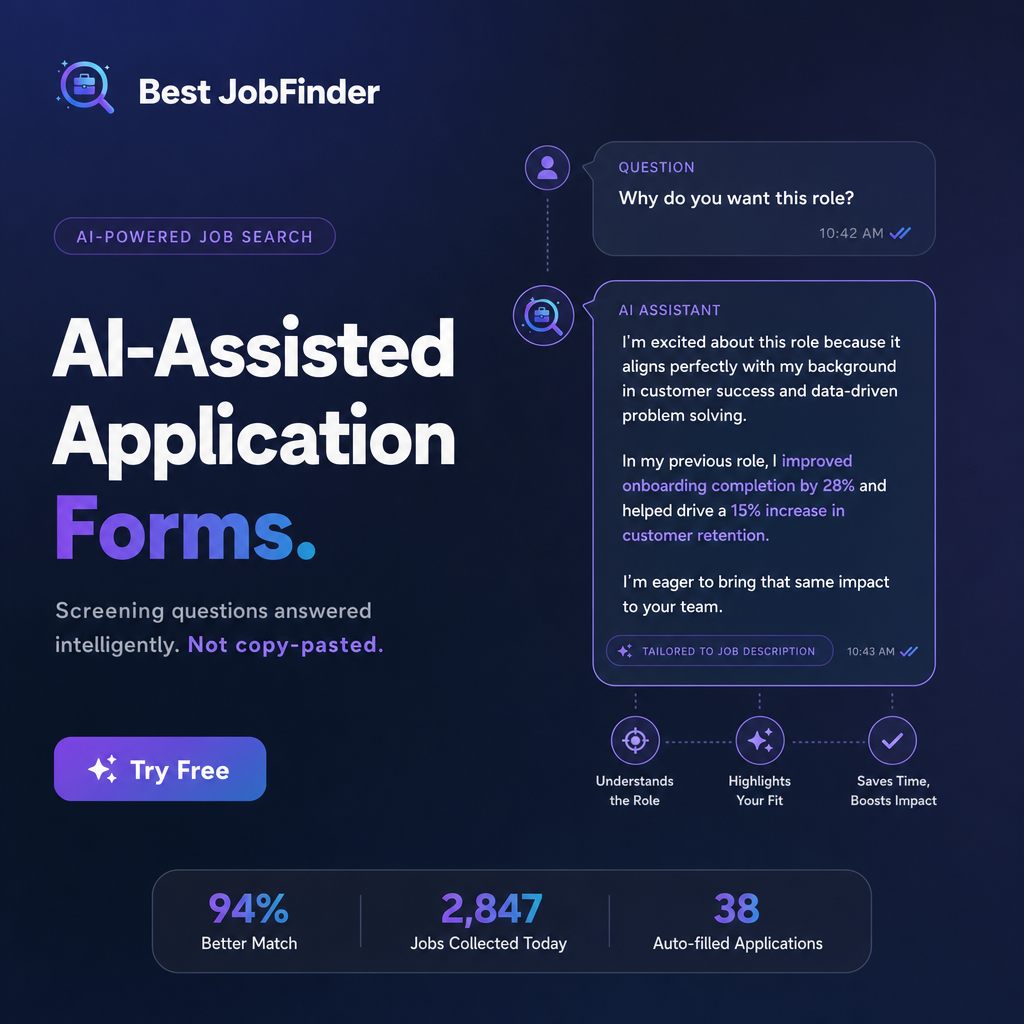
"Why do you want this role?" is the question that reveals whether an application was actually written for the job in front of it, or copy-pasted from whatever answer went in last time. A hiring manager reading it can usually tell the difference in one sentence — and a form-filler that answers it with the same generic paragraph on every application defeats the entire purpose of asking.
Key takeaways
- A copy-pasted answer to an open-ended screening question is one of the fastest ways to deprioritize an otherwise strong application.
- A grounded answer references both the specific job description and your own real background — that combination is what makes it hard to reuse verbatim.
- Previously given answers are matched against new but similar questions, so the same question phrased differently doesn't need a fresh generation every time.
- Every generated answer should be reviewable and correctable before submission, in either copilot mode or a paused auto-apply run.
- Raw JSON or AI scaffolding should never reach the actual form field — only clean, readable text belongs in the answer box.
What makes an answer grounded instead of generic
The difference between a real answer and a template comes down to specificity in two directions at once: does it reference something particular to this posting — a responsibility it names, a priority it states — and does it reference something particular to you — an accomplishment, a skill, a number from your own history. An answer missing either half reads as filler regardless of how polished the sentences are.
Why matching existing answers matters as much as generating new ones
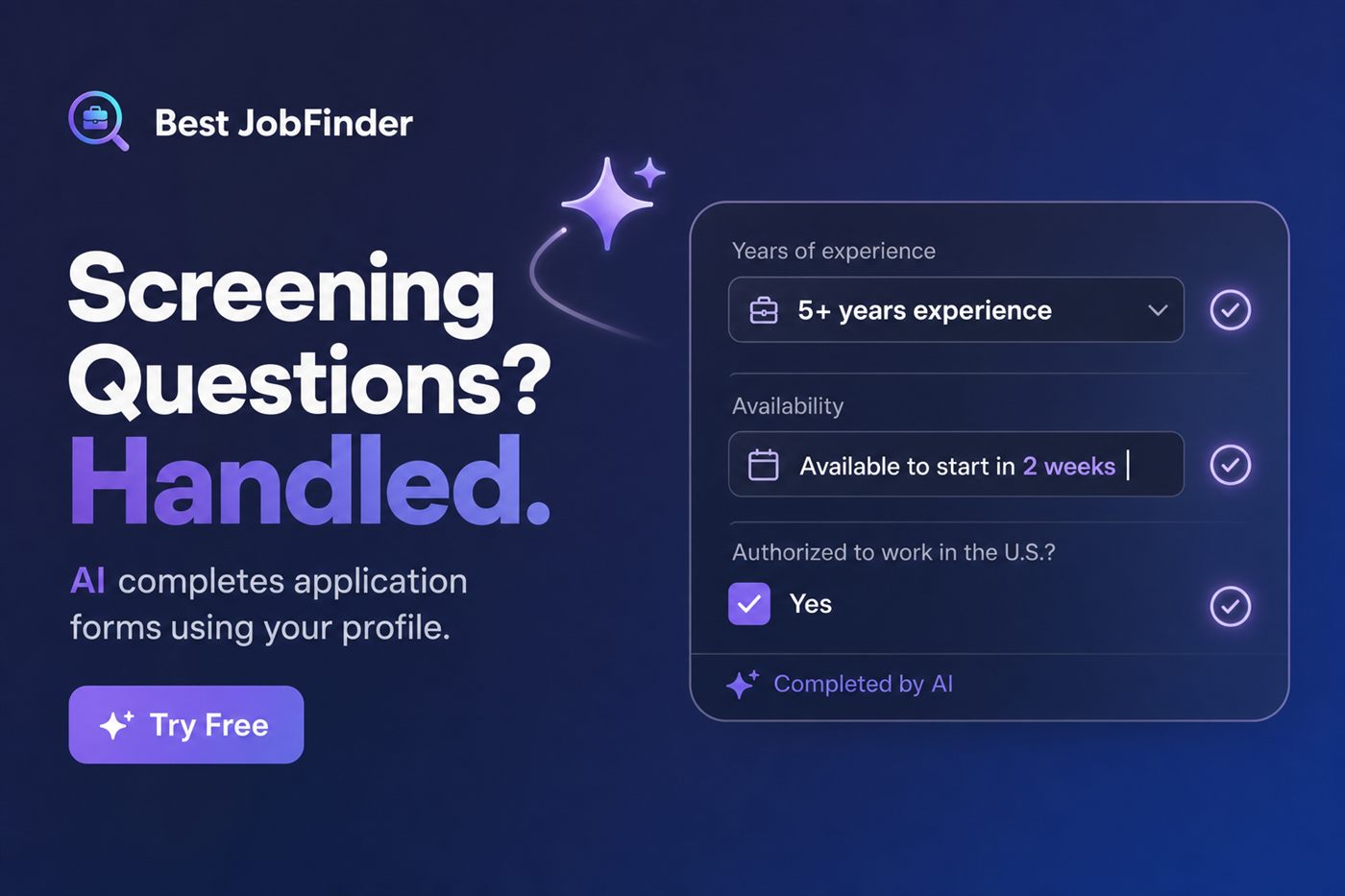
Not every screening question needs a fresh AI pass — many are the same underlying question phrased slightly differently across applications ("years of experience with X" appears in a dozen different wordings). Matching a new question against your existing answer history first — using an exact match, then a normalized comparison, then a partial match — avoids regenerating an answer you've effectively already approved, and keeps your answers consistent with each other across applications.
A few questions should never be auto-answered at all
Some form fields aren't really questions with a correct answer to look up — a "mark this job as one of my top choices" checkbox is a signal to the employer about your intent, not a fact about you, and automation should never check it on your behalf. The same caution applies to anything that reads as a deliberate signal rather than a factual question.
Keeping the output clean
Whatever generates the answer, what actually lands in the form field has to be plain text — never a raw JSON blob, a fenced code snippet, or any other scaffolding that shouldn't be visible to a human reader. This matters for keeping fast applications from looking careless.
Frequently asked questions
Why do application forms ask open-ended questions in the first place?
They're a cheap way for an employer to filter for genuine interest and basic writing ability before a human reviewer gets involved — a copy-pasted, generic answer to 'why do you want this role' is often the first thing that gets an application deprioritized, regardless of how strong the resume attached to it is.
How does an AI answer a screening question without sounding generic?
By grounding the answer in two specific things: the actual job description in front of it, and your own real background — a past accomplishment, a specific skill, a number you've used before. An answer that references both is inherently harder to reuse verbatim on a different application, which is exactly what makes it read as genuine rather than templated.
What happens with a screening question the system has seen before?
Answers you've given — or approved — are stored and matched against similar future questions using exact, normalized, and partial matching, so a question you've effectively already answered doesn't need a fresh AI generation every time. A genuinely new question either gets an AI-generated answer tailored to that job, or is flagged for you to answer once.
Can I review or correct an AI-generated answer before it's submitted?
Yes — in copilot mode you review every field before submitting, and in a supervised auto-apply run you can pause, edit any answer, and resume. Any correction you make is saved as your preferred answer for that question going forward, not discarded after that one application.
Ready to automate your job search?
Best JobFinder combines job discovery, AI skill matching, resume tailoring, and configurable auto-submit in one platform — with a 7-day free trial.
Try Best JobFinder free →