Overnight Job Search Automation: Wake Up to Matched, Scored Jobs
New job postings don't wait for business hours. A role can go up at 11 p.m., collect its first fifty applicants by breakfast, and effectively close before you've even opened your first tab of the day. If your search only runs when you're sitting at your laptop actively looking, you are structurally behind on every posting that appears outside that window.
Scheduling the search itself — running it overnight, automatically, across every board you'd normally check — closes that gap without asking you to stay up watching a job board.
Key takeaways
- A posting that appears at night and is manually checked once a day is effectively invisible for most of its early life.
- Overnight automation runs the same search and filters you'd set manually — it doesn't widen or loosen anything, just the timing.
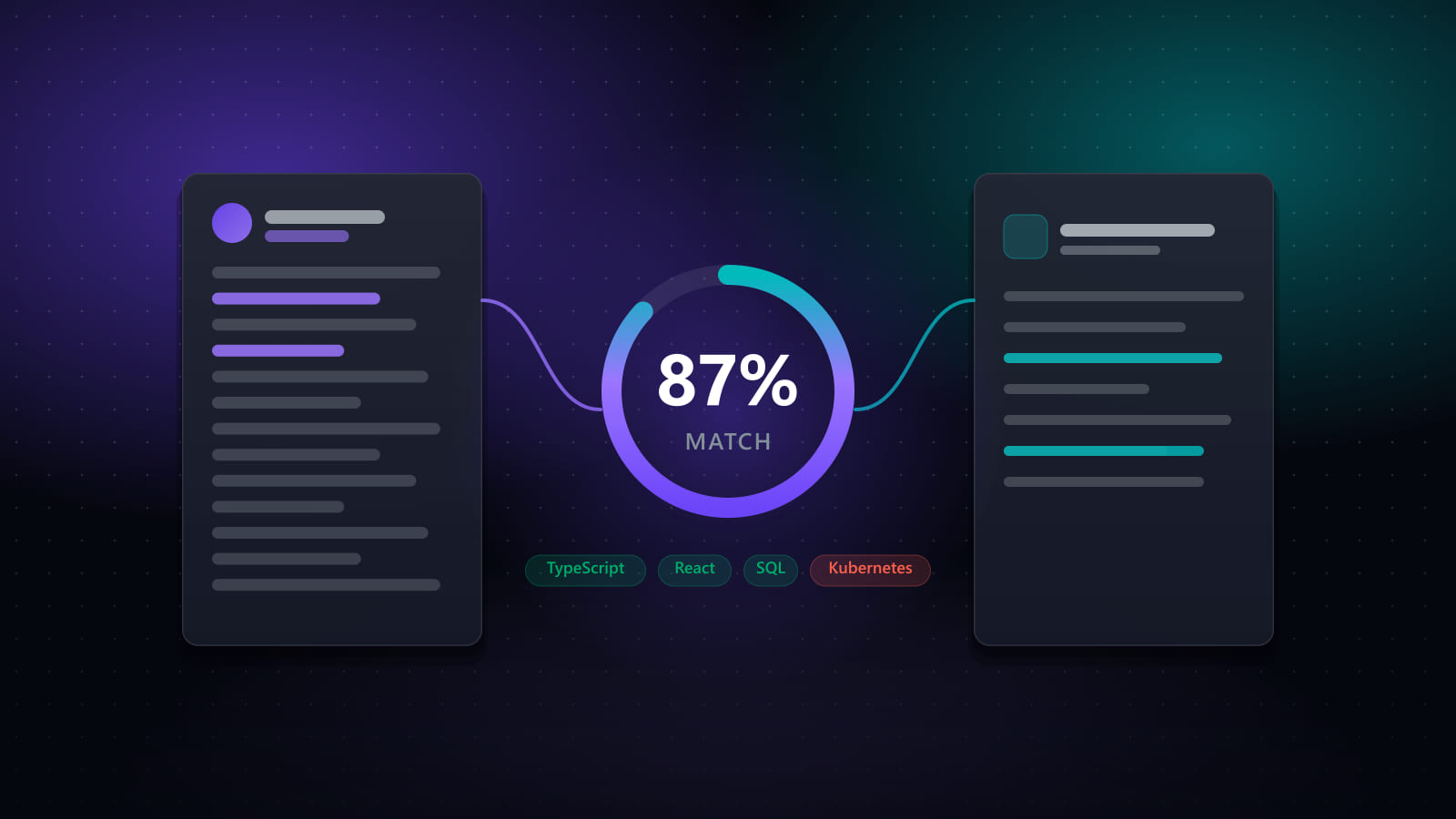
- New matches are scored against your skills profile immediately, so you wake up to a ranked list, not a raw feed.
- Automated runs use randomized, human-like pacing between requests — the same anti-detection discipline as a manual search, just unattended.
- You choose whether the run only surfaces matches for review, or queues applications above a match threshold — see configurable auto-submit.
What actually happens overnight
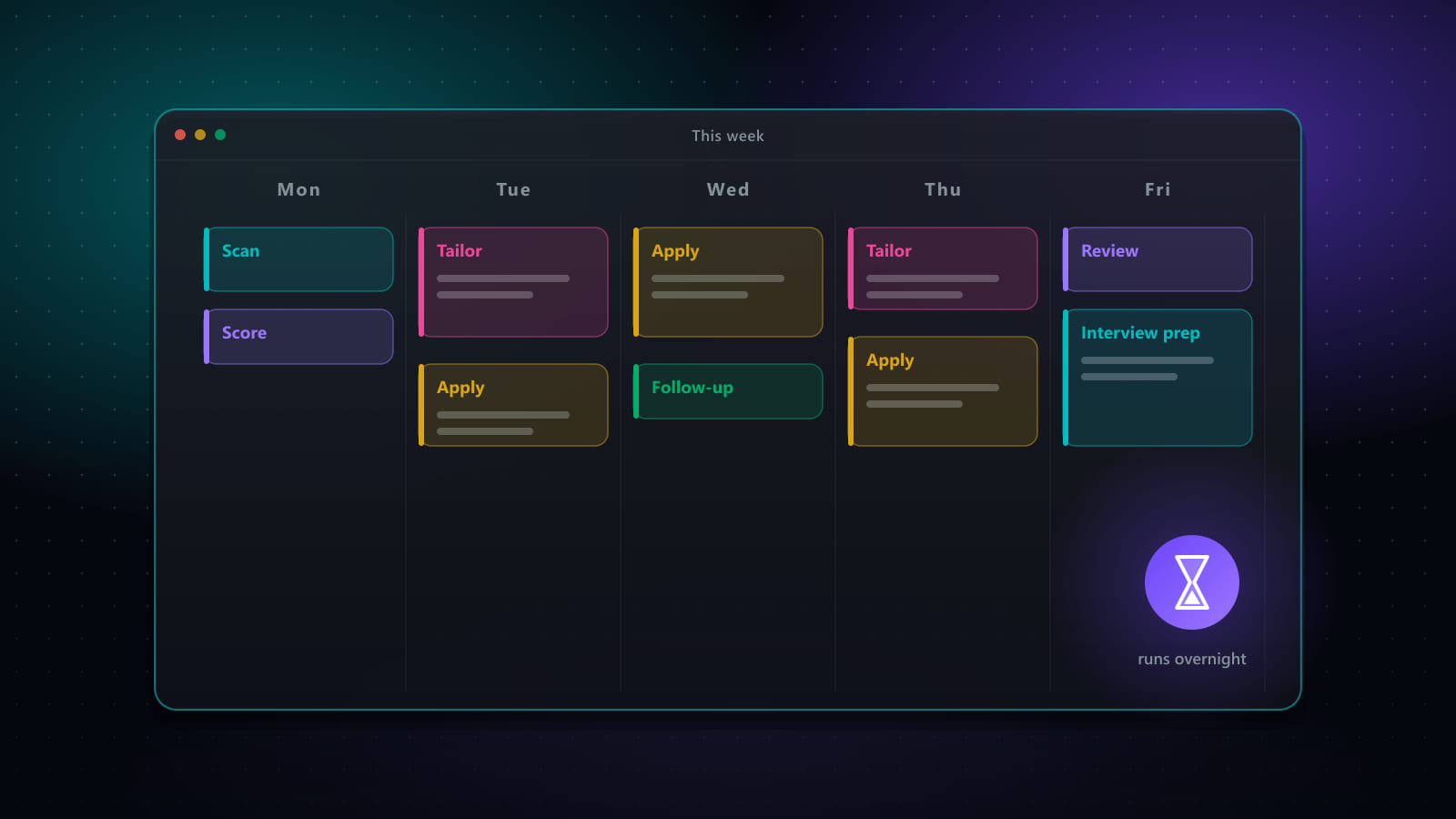
A scheduled run executes your existing search profile — the same boards, keywords, location and seniority filters you'd use manually — on a timer rather than only when you remember to open the app. Each new posting found is scored against your skills profile the same way a manually-triggered search would score it, so the list waiting for you in the morning is already ranked, not just a raw dump of everything new since yesterday.
Why timing compounds with everything else in this pipeline
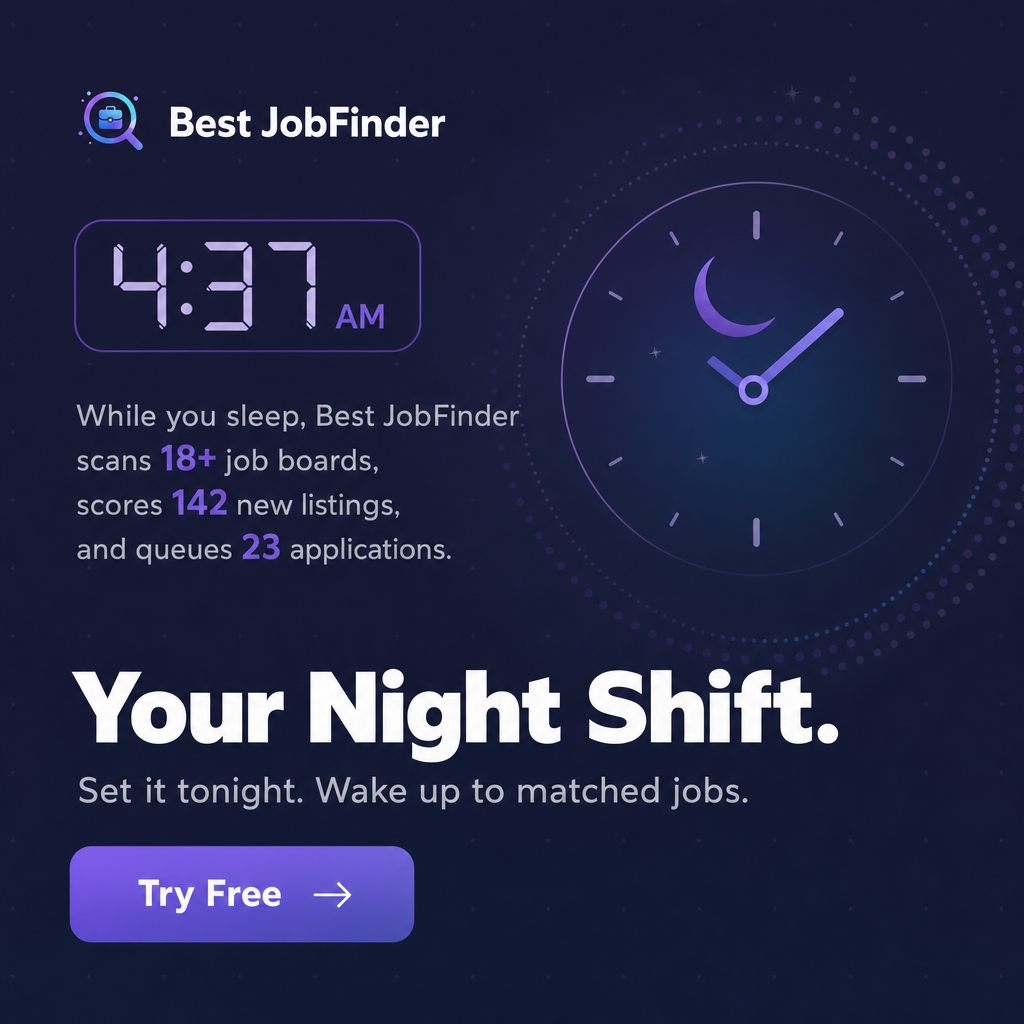
An overnight scan is only useful if what happens next is fast too. Finding a strong match at 4 a.m. and then spending 25 minutes manually filling out an application form six hours later erases most of the timing advantage. That's why scanning, scoring, and — for the applications you've configured to auto-submit — applying are meant to run as one connected sequence rather than three separate manual steps spread across a day.
Staying invisible to bot detection while doing it
Running unattended at 4 a.m. is exactly the kind of pattern anti-bot systems watch for if it's done carelessly — rapid-fire requests with no variation are an obvious signal. Every scraper run uses randomized delays with jitter between page visits and never issues parallel requests against the same board, so an overnight run reads as a single slow, human visitor rather than a script working through a list as fast as possible.
Choosing what an overnight run is allowed to do
The safest default is scan-and-score only: wake up, review a ranked list, decide for yourself what to apply to. Once you trust the match scoring for a given search, you can extend it — see configurable auto-submit — so postings above a threshold you set are already queued or submitted by the time you check in.
Frequently asked questions
Does applying earlier in a job's lifecycle actually improve your odds?
It's widely believed among recruiters that being among the first applicants gets more attention before a hiring manager has skimmed a hundred resumes and started skipping, though the effect size varies by role and company. What's not in question is that a posting scanned once a day misses openings that go up and fill within hours — an overnight scan simply narrows that window from a day to a few hours.
What does 'scans while you sleep' actually run?
A scheduled search-profile run: the same board coverage and filters you'd set for a manual search, executed automatically on a cron-style schedule rather than only when you remember to check. It surfaces new listings, scores each one against your skills profile, and — if you've configured it — queues applications for the ones above your threshold, all before you wake up.
Do I need to babysit an overnight run?
No — that's the point of scheduling it, but you stay in control of what happens with the results. You can set it to just surface and score new matches for you to review in the morning, or, if you've turned on auto-apply, to queue applications above a match threshold you set. Every run is logged and reviewable afterward regardless of which mode you choose.
Will overnight scanning trigger anti-bot detection on job boards?
Automation that hammers a board with rapid, back-to-back requests is exactly what gets flagged. Search runs use randomized human-like delays and pacing between page visits rather than firing requests as fast as possible, and never run in parallel against the same source — the goal is a run that looks like someone slowly browsing, just at 4 a.m. instead of during the day.
Ready to automate your job search?
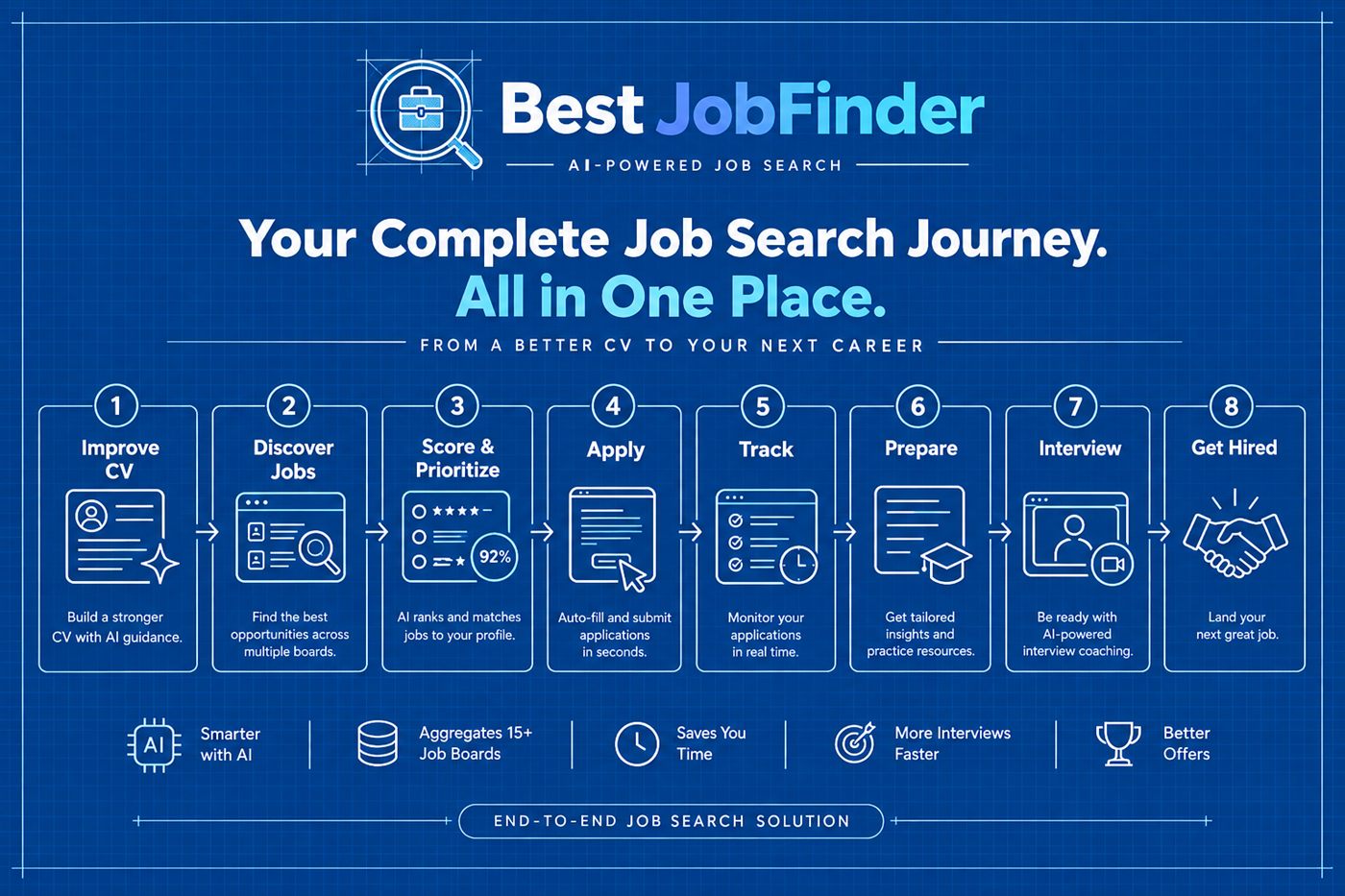
Best JobFinder combines job discovery, AI skill matching, resume tailoring, and configurable auto-submit in one platform — with a 7-day free trial.
Try Best JobFinder free →