The All-In-One Job Search Platform: Discover, Score, Apply, Track, Prepare, Get Hired
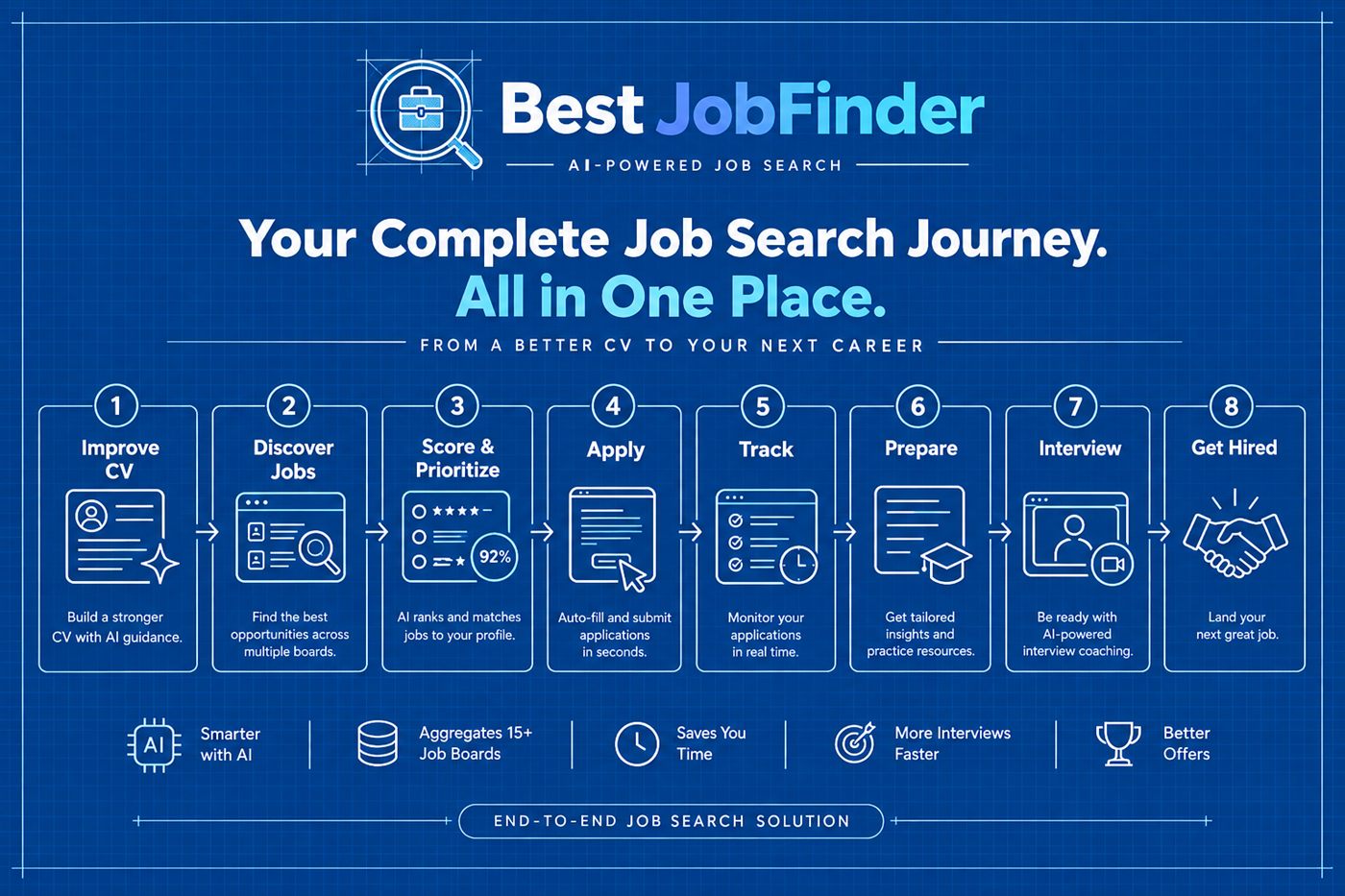
Run a real job search and it splits into eight distinct pieces of work: get your CV in shape, discover openings, decide which ones are worth your time, apply, keep track of where each application stands, prepare for whichever round comes next, interview, and eventually get an offer. Most people run every one of those stages in a different place — a job board here, a resume builder there, a spreadsheet nobody updates consistently, a notes app for interview prep.
None of those tools is wrong on its own. The problem is what happens between them: the job you found on LinkedIn has to be manually re-typed into your tracker, the resume you tailored for one posting doesn't carry its edits into the next one, and by week three you genuinely cannot remember whether you already applied to a given company. That coordination cost is what an all-in-one platform is actually solving — not "does more stuff," but "the stuff doesn't lose context between steps."
Key takeaways
- A job search has eight real stages: CV, discovery, scoring, applying, tracking, prep, interviewing, offer.
- The cost of running each stage in a separate tool isn't the tools — it's re-entering the same job, skills and status at every handoff.
- A connected platform works because every stage reads and writes the same job record and skills profile, not because it has more features.
- You can use one stage without the others — discovery and tracking work fine with jobs found or applied to elsewhere.
- The measure of 'all-in-one done right' is whether combining stages made each one worse, or made the handoffs disappear.
The eight stages, and where they usually break
Walking through them in order shows exactly where a fragmented search loses time:
- 1. Improve your CV. Static, rewritten by hand for a handful of applications, then reused unchanged for the rest.
- 2. Discover jobs. Spread across a dozen boards, each with its own search syntax, login and layout — see why one search across 20+ boards changes this.
- 3. Score and prioritize. Usually skipped entirely, which means time gets spent on low-fit roles at the same rate as high-fit ones — see how a match score should work.
- 4. Apply. The single most repetitive stage: the same fields, typed into a different ATS, for every application.
- 5. Track. A spreadsheet that's accurate for a week and stale by the third.
- 6. Prepare. Generic interview advice instead of practice specific to the role and company you're actually about to talk to.
- 7. Interview. The one stage that stays fully human — and should.
- 8. Get hired. The outcome every earlier stage is either supporting or quietly undermining.
What "connected" actually means, concretely
The difference between a suite of features and a genuinely connected pipeline is whether data survives the handoff between stages:
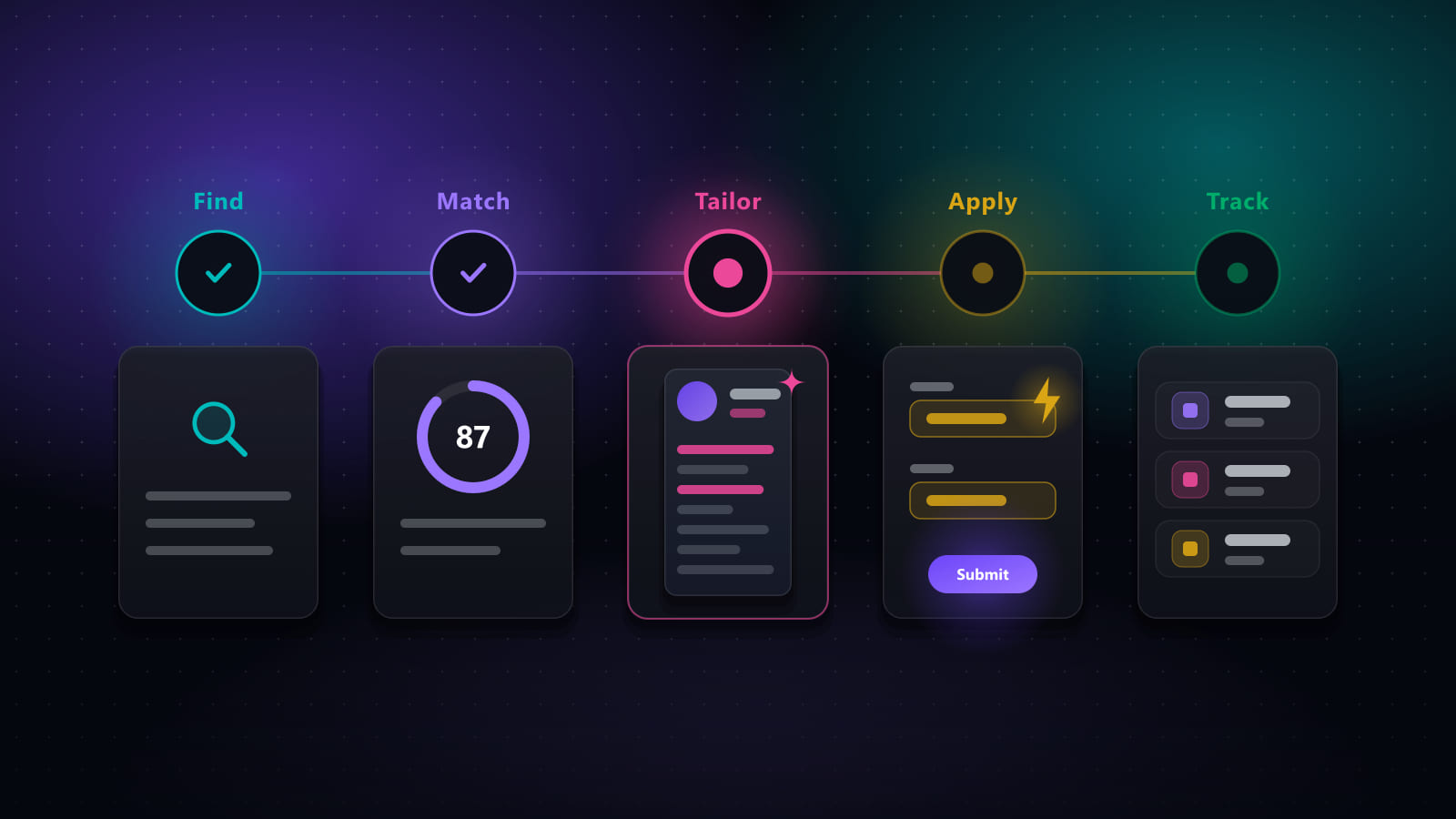
- The skill profile you build once feeds both the match score on stage 3 and the resume tailoring on stage 4 — the same skills, the same weights, not a second copy you have to keep updating.
- A job discovered by a search profile lands directly on the tracker board in stage 5 at whatever status it's actually at — new, applied, interview — rather than requiring you to add it manually.
- Application questions answered once are remembered and reused across every future application that asks something close to the same thing, rather than re-answered from scratch on job number forty.
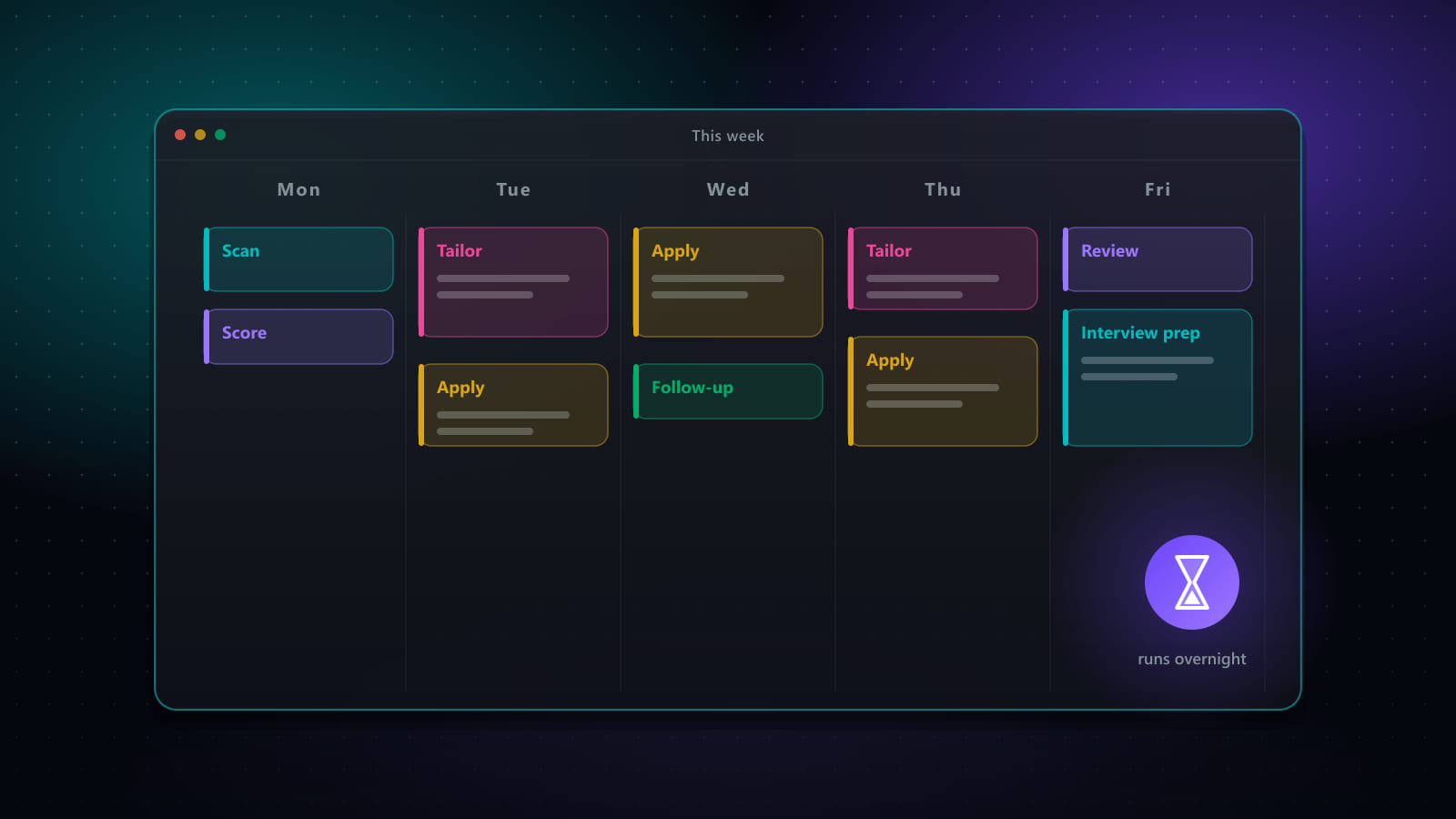
- Auto-apply, when you turn it on, is supervised — you set the thresholds for what submits automatically versus what needs your review, and every run stays pausable and editable mid-flight. Nothing about connecting the stages removes that control.
Where automation genuinely helps, and where it shouldn't
Stages 2 through 5 are mechanical enough to automate safely: discovery is a search, scoring is a comparison against your own skills, applying is form-filling, and tracking is bookkeeping. Stage 1 (a genuinely honest CV) and stage 6 (real interview practice) benefit from AI assistance but still need your judgment. Stage 7 — the actual interview — is not something any platform should try to automate, and stage 8 is the result of everything before it, not a step you take yourself.
Where to start if this is new to you
You don't need to adopt all eight stages on day one. A reasonable order: build your skills profile and CV first, connect a search so discovery and scoring run without you watching a board all day, then decide how much of the application step you want automated versus reviewed yourself. The tracker and prep stages matter most once you have more than a handful of applications in flight — which, if discovery and applying are working, happens faster than you'd expect.
Frequently asked questions
What does an all-in-one job search platform actually replace?
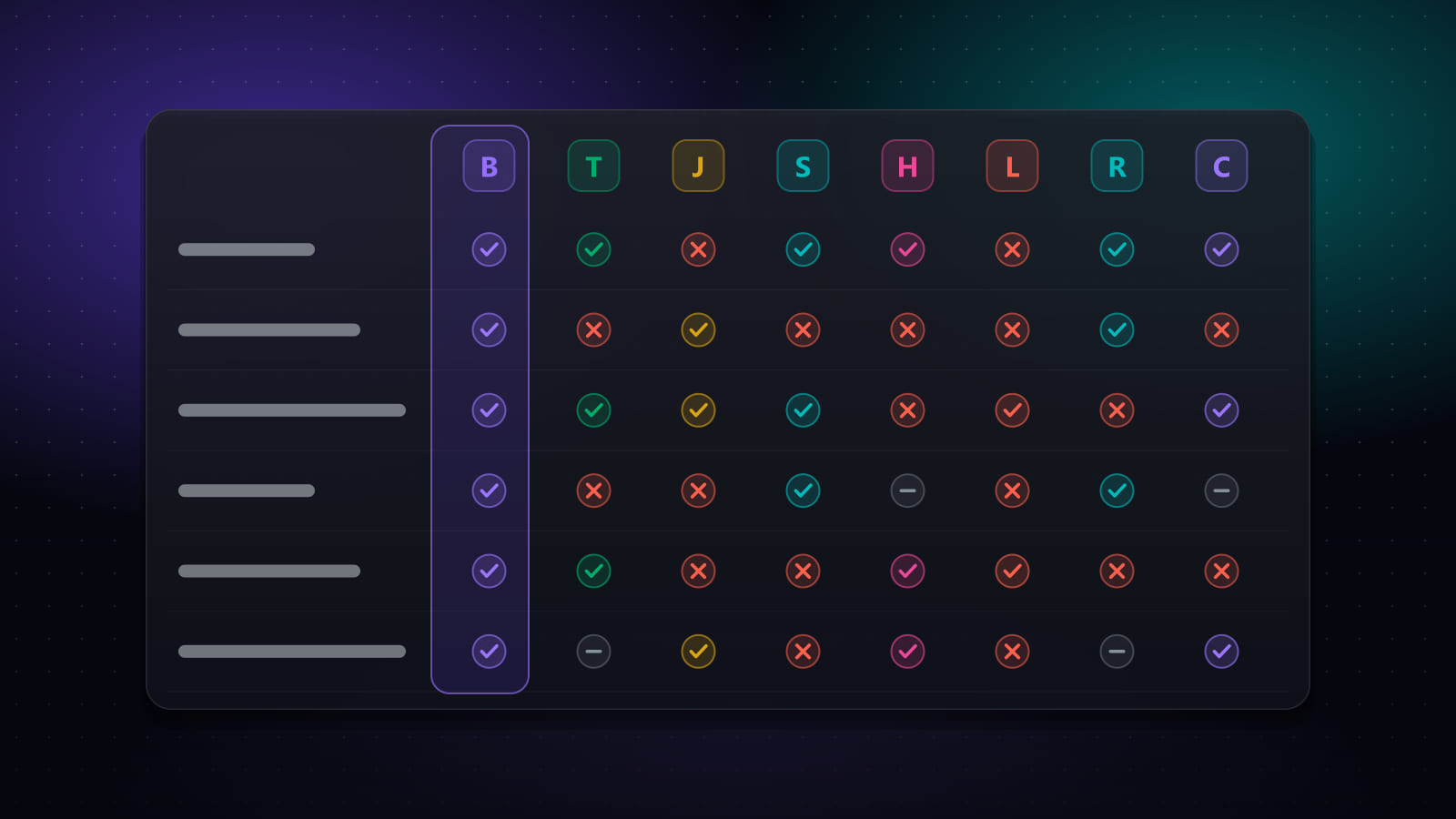
In a typical unbundled search, that's a job board (or several, in separate tabs) for discovery, a spreadsheet or Notion board for tracking, a resume builder for tailoring, a separate cover letter tool, and a calendar or notes app for interview prep. An all-in-one platform replaces the coordination between those tools, not just the tools themselves — the job you find is the same job you score, tailor for, apply to, and track, without re-entering anything at each handoff.
Does combining every stage into one app make it worse at each stage?
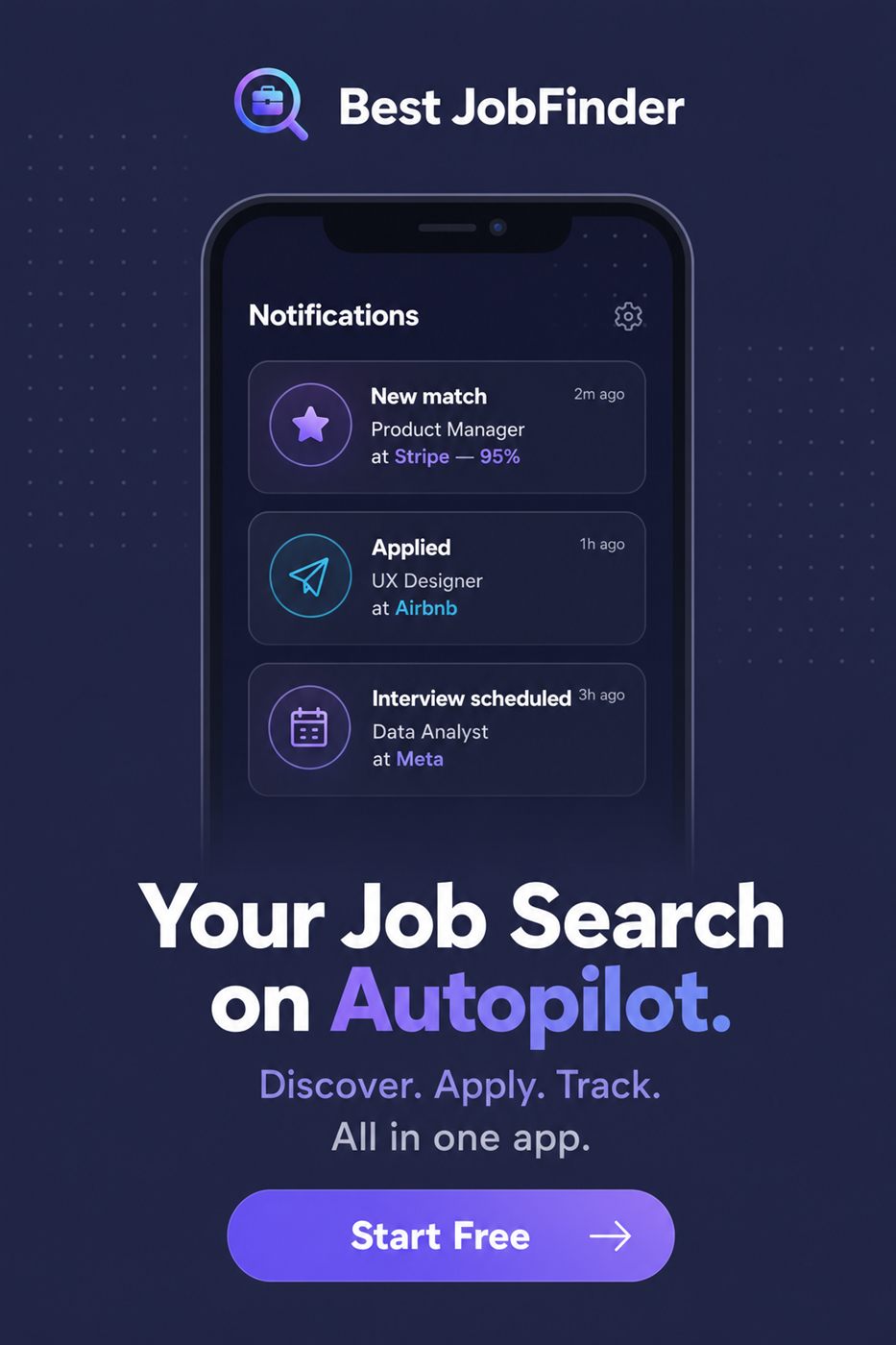
It can, if the platform bolts features together without sharing data between them. The test is whether the stages actually feed each other: does the match score use the same skill data the tailoring step uses? Does applying update the same board you're tracking against? Best JobFinder is built around one job record and one skills profile that every stage reads from and writes back to, specifically so combining stages doesn't mean diluting them.
Do I have to use every stage, or can I just use the parts I want?
Each stage works independently. You can run discovery and scoring without ever turning on auto-submit, use the tracker with jobs you found manually elsewhere, or generate a tailored resume for a single application without connecting a search profile at all. The stages are designed to compound when you use them together, not to require each other.
How is this different from just using ChatGPT plus a spreadsheet?
A general-purpose assistant can help you write a cover letter or brainstorm interview answers, but it doesn't hold a session on job boards, doesn't remember your search from one day to the next, doesn't submit application forms, and doesn't know what stage 40 different jobs are each sitting at. Assembling the equivalent yourself means rebuilding the parts covered in this post — see the fuller comparison in our AI agents vs. job search platform piece.
Ready to automate your job search?
Best JobFinder combines job discovery, AI skill matching, resume tailoring, and configurable auto-submit in one platform — with a 7-day free trial.
Try Best JobFinder free →