Know Which Jobs Are Worth Your Time: How an AI Job Match Score Works
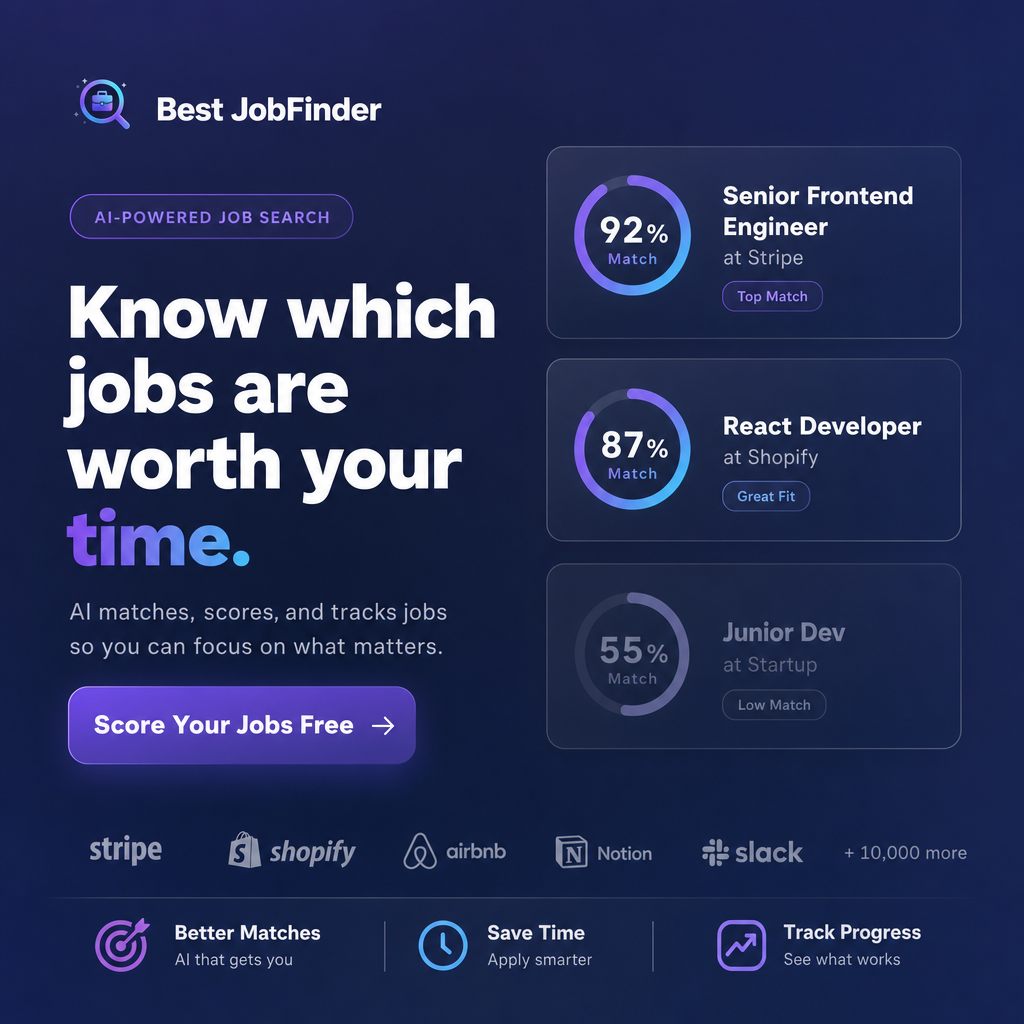
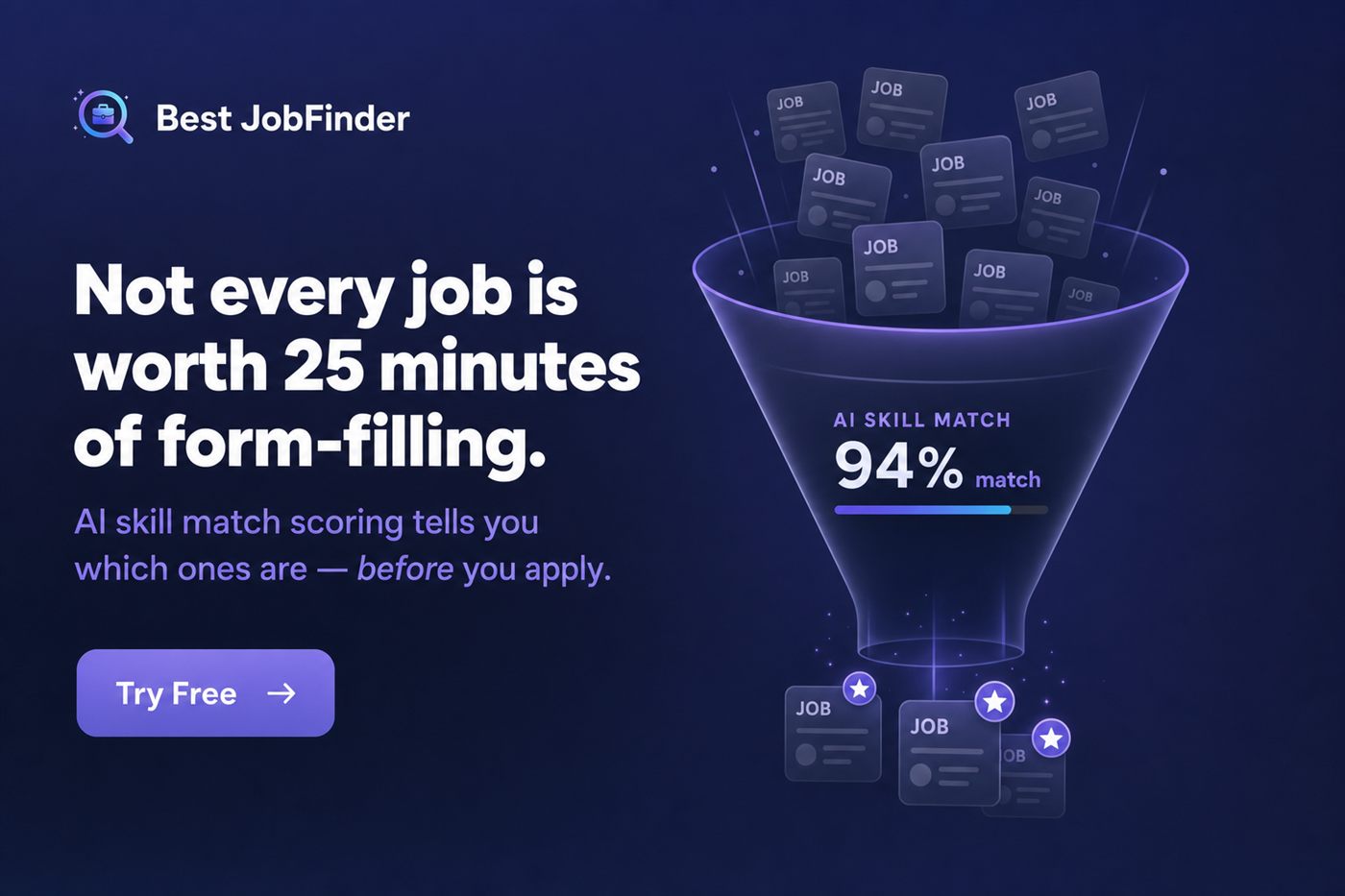
A full application — tailoring a resume, writing something specific in the cover letter, answering screening questions honestly — takes real time. Spend that time on a 92% match and a 55% match at the same rate, and you're treating a strong lead and a long shot identically. A job match score exists to stop that: a quick, consistent answer to "is this worth the 25 minutes" before you commit to it.
Key takeaways
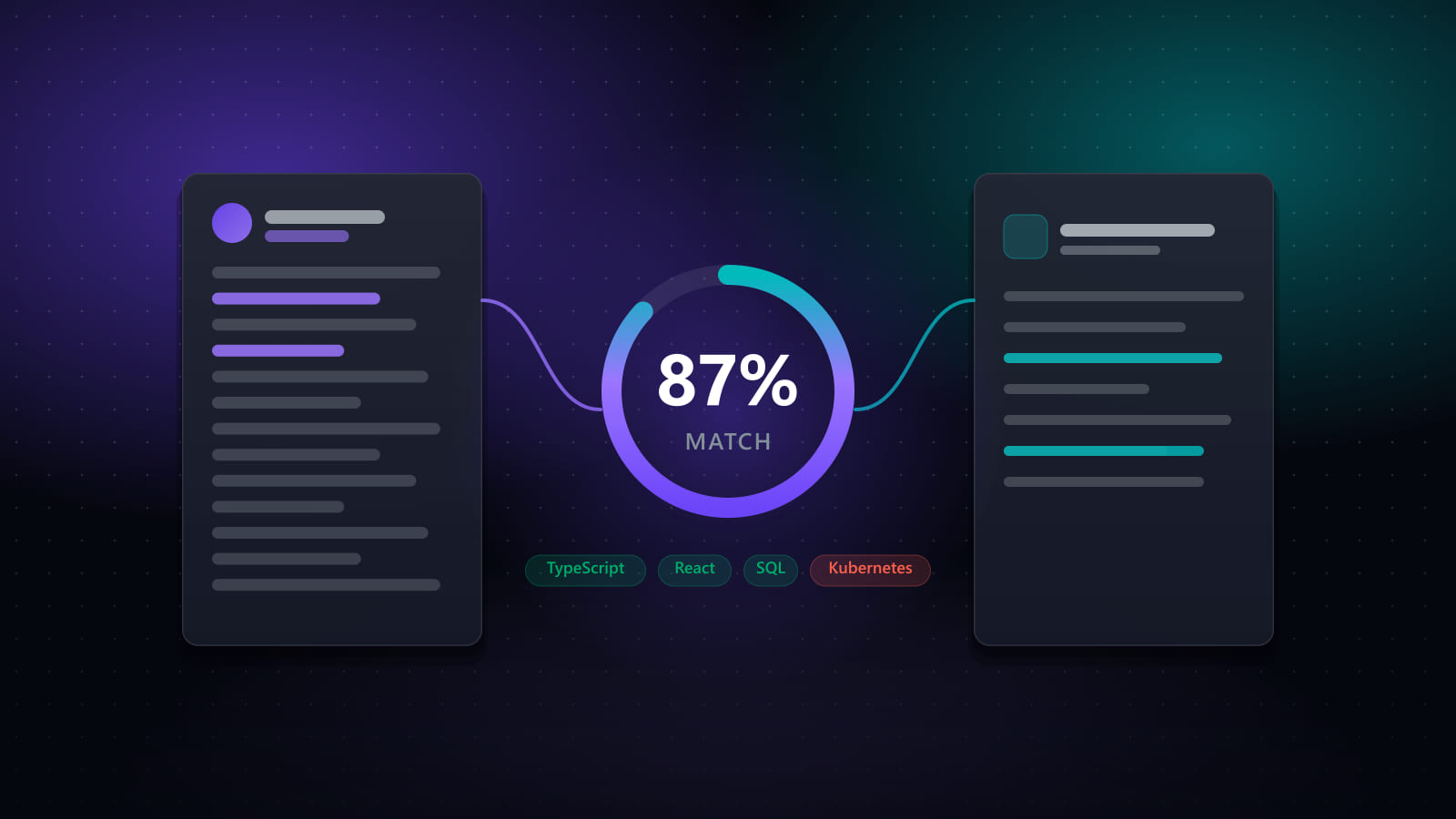
- A match score compares the skills a posting asks for against your own skills profile, weighted by competency and importance — it's a comparison, not a black box.
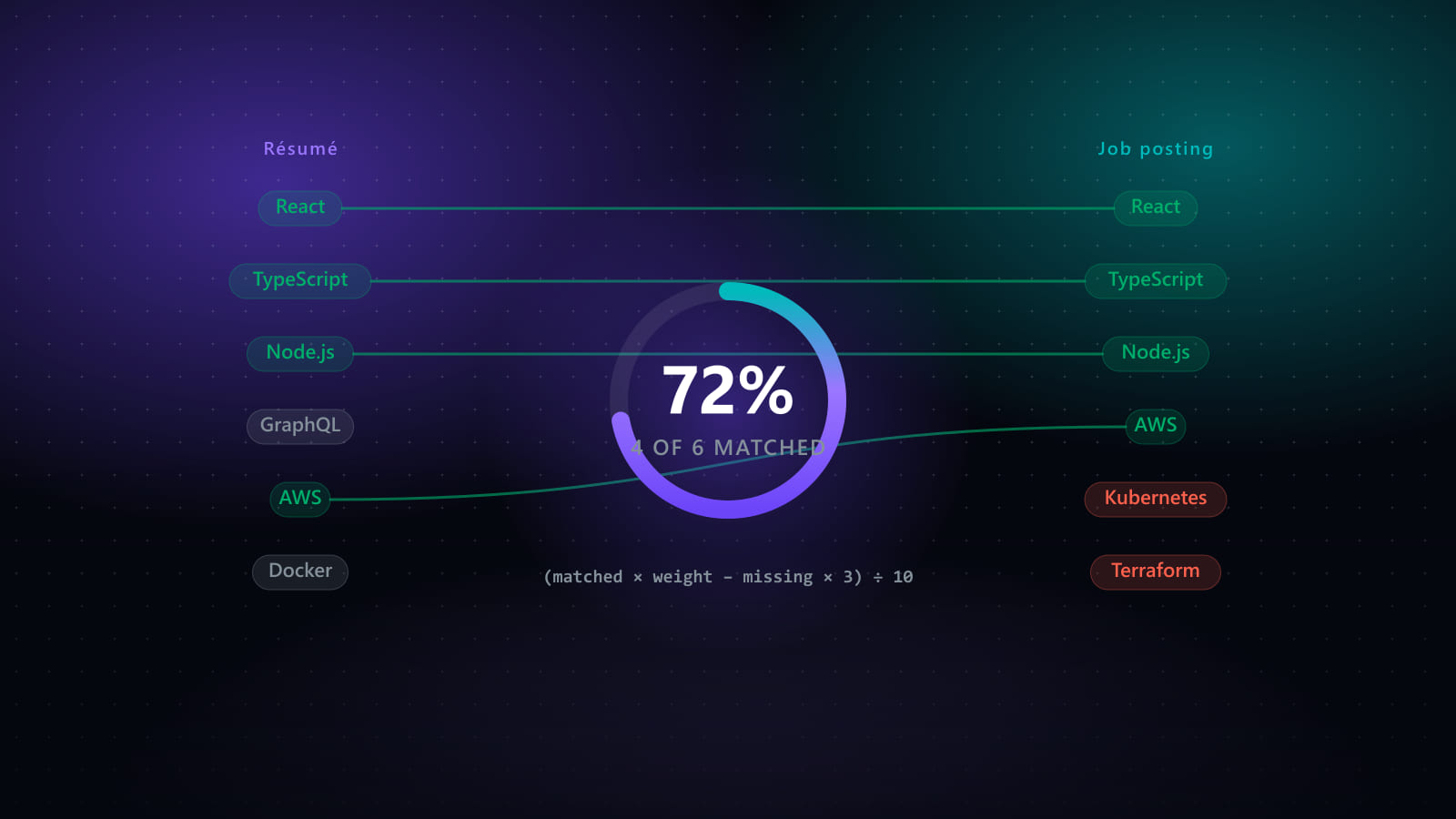
- Missing skills count against the score; matched skills contribute based on how strong you rated yourself in them.
- A thin or outdated skills profile produces an artificially low score — the score is only as good as what you've told it about yourself.
- Use the score to triage where your limited application time goes, not as a hard cutoff for what you're allowed to apply to.
- The same job should never show two different scores on two different screens — that's a bug in how the score was computed, not a feature.
What actually goes into the number
The score compares two lists: the skills a job posting mentions, and the skills in your profile, each one carrying a competency rating and a weight you've assigned. A skill that appears in both counts toward the score in proportion to how strong you rated yourself in it; a skill the posting lists that isn't in your profile counts against it. The result can exceed a simple percentage or drop below zero if enough required skills are missing — it's a genuine signal, not a normalized "out of 100" gimmick that's been flattened to look tidy.
Why the score is a filter, not a verdict
Two things quietly determine most of the accuracy: whether your skills profile is actually complete, and whether the job posting's own text was parsed cleanly. A three-year-old profile missing your last two roles' skills will under-score everything. A posting written mostly as marketing copy with the actual requirements buried in a single dense paragraph gives the scorer less to work with. Neither failure means the job itself is a bad fit — it means the score needs better inputs, which is worth fixing before trusting the number at all.
Consistency matters as much as the formula
A match score that shows 92% on the job card and 68% on the detail page for the same posting destroys trust in the number immediately, regardless of which one is "more correct." Best JobFinder always computes the live score — using the freshest skill data for that job — and treats any previously stored score purely as a fallback for when a live computation isn't available, so the number you see never contradicts itself between screens.
Turning the score into an actual decision
A practical split: apply promptly and fully to anything above the range you personally consider strong, skip anything clearly low unless the role matters to you for reasons the score can't see (location, growth, a company you specifically want), and use the missing-skills breakdown on anything in between to decide whether a cover letter can close the gap. That breakdown is also exactly what an enhanced job page should surface alongside the score itself, rather than a bare number with no explanation.
Frequently asked questions
What actually feeds a job match score?
Two things: the skills a job posting requires or mentions, and the skills in your own profile, each weighted by how much you rate your competency and how important that skill is to you. A matched skill contributes based on your competency percentage times its weight; a skill the job lists that you don't have counts against the score. The result is a single number, but it's built from a transparent comparison, not a black box.
Can a match score be wrong?
Yes, in both directions. It can undercount if your skills profile is thin or outdated — a skill you have but never added simply isn't counted. It can overcount if a job description lists a skill only as 'nice to have' and the scorer weights it the same as a hard requirement. A match score is a triage tool for deciding what to look at closely, not a substitute for reading the posting.
Why does the same job sometimes show a different score in different places?
Usually because the two surfaces are scoring against a different skill set — one against just your stored profile, another against your profile plus skills pulled live from the page. Best JobFinder resolves this by always computing the live version and treating a stored score as a fallback only, specifically so a job card and the detail page never disagree with each other.
Should I ever apply to a job with a low match score?
Sometimes — a low score usually means missing skills, not a bad fit for other reasons like career growth, location or company. Use the score to prioritize your time, not to filter out every role below an arbitrary cutoff. If a role matters enough to you, the score is exactly the information you need to know which gaps to address in your cover letter.
Ready to automate your job search?
Best JobFinder combines job discovery, AI skill matching, resume tailoring, and configurable auto-submit in one platform — with a 7-day free trial.
Try Best JobFinder free →