One Click, Three Documents: Generating a Matched CV, Resume, and Cover Letter Together
A tailored resume and a tailored cover letter for the same job are supposed to work as a pair — the cover letter expanding on a point the resume only lists, the resume backing up a claim the cover letter makes. Generate them separately, on separate passes, and that coordination has to happen by accident. Generate them from the same job description in one step, and it doesn't have to.
Key takeaways
- 'CV' and 'resume' refer to the same tailored document for the purposes of a job application in most contexts — not two separate artifacts.
- Generating a resume and cover letter from the same source pass keeps them consistent rather than accidentally repeating or contradicting each other.
- Analyzing the job description and your profile is the slow part — producing a second document from that same analysis is comparatively quick.
- One click doesn't mean unreviewed — both documents should still be checked before sending.
- Choosing a tailored mode over a comprehensive mode matters for both documents, and should apply consistently to whichever set you generate.
Why separate generation drifts apart
Ask two separate AI passes — one for a resume, one for a cover letter — to work from the same job description independently, and they don't share any memory of what the other one chose to emphasize. Both might lean on your most recent role's headline achievement, leaving the cover letter with nothing new to add, or they might use different numbers for the same metric if your source material states it two ways. One combined pass avoids this because both documents draw from the same single analysis of the job and your background.
What a matched set actually looks like
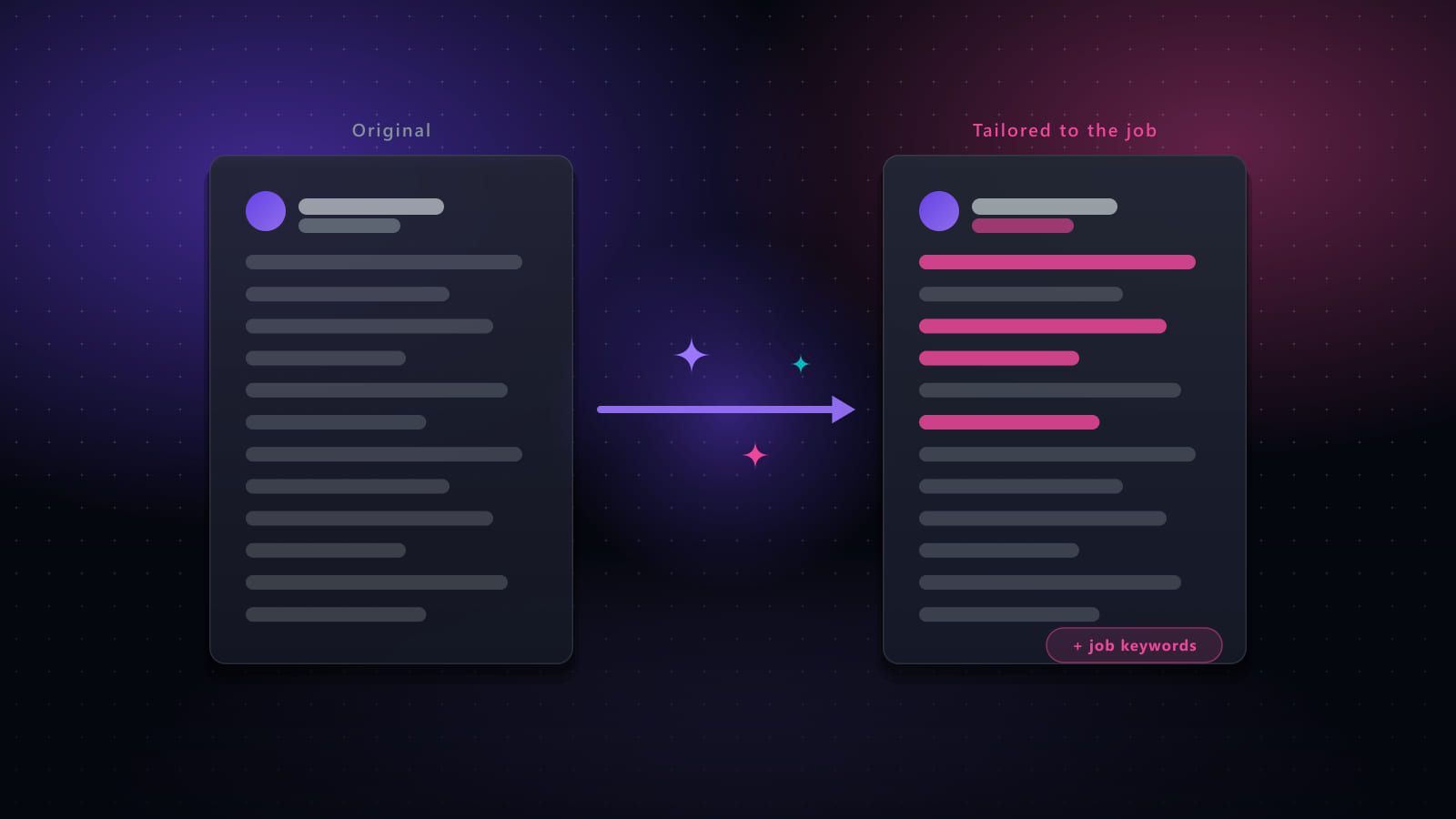
The resume leads with the qualifications the posting cares about most, reordered and re-emphasized. The cover letter picks up from there — explaining motivation, addressing anything the resume can't (a gap, a pivot, why this specific company), and pointing toward the resume rather than repeating it verbatim. Together they read as one application built for one job, not two documents that happen to be about the same person.
Choosing tailored versus comprehensive for both
The same mode choice applies across the set: a tailored pass ruthlessly narrows to what this specific posting cares about, while a comprehensive pass includes your full history for cases where you want a complete master version rather than a targeted one. For an actual application in progress, tailored is the right default for both documents — see the fuller reasoning in what AI CV tailoring should and shouldn't change.
The review step doesn't disappear
One click producing a matched set is a starting point, not a finished submission. Check that titles, employers and dates match your real history in both documents, that every number is accurate, and that the tone reads like you before either one goes out — the same verification pass either document would need if you'd written it by hand.
Frequently asked questions
Is a 'CV' different from a 'resume'?
In everyday use across most job applications, they refer to the same document — a CV/resume tailored to a specific role. (In academic and some international contexts, 'CV' can mean a longer, comprehensive career record, which is a separate document from what most job applications ask for.) When a job application asks for either term, it's asking for the same tailored document.
Why generate the resume and cover letter together instead of separately?
Because they should agree with each other. Generated separately, the two documents can end up leaning on the same one or two accomplishments, using slightly different phrasing for the same fact, or emphasizing different things about the same job description. Generating both from the same source material in one pass keeps them consistent.
Does generating both documents at once take longer than generating one?
Not meaningfully — the time-consuming part is analyzing the job description and your profile, which happens once regardless of how many documents come out of it. Producing a second, consistent document from the same analysis is comparatively fast.
Do I still need to review both documents before sending them?
Yes, always. AI-generated documents should be checked the same way a manually tailored one would be — titles, dates and numbers verified against your real history, and the content read once for tone and accuracy before it goes out.
Ready to automate your job search?
Best JobFinder combines job discovery, AI skill matching, resume tailoring, and configurable auto-submit in one platform — with a 7-day free trial.
Try Best JobFinder free →