AI CV Tailoring: What It Changes and What to Check
Most complaints about AI-tailored CVs come down to the same thing: the tool was asked to do more than tailoring. Tailoring means changing how existing material is presented. When output starts containing experience that was never supplied, that is not aggressive tailoring — it is a different and much worse operation.
This covers what a tailoring pass should change, what it must leave alone, and a four-point review that catches the specific mistakes AI makes reliably.
Key takeaways
- Tailoring reorders, re-emphasises and rewords existing material. Anything that adds new facts is a malfunction, not thoroughness.
- Five things are locked: job titles, dates, employer names, qualifications, and quantified results. These are exactly where AI invents most confidently.
- The mechanism is simple — screening compares your document to a requirement list, so matching evidence needs to be visible in the first third.
- Grade the effort: a light automated pass for most applications, a heavy manual pass for roles you actually want.
- The four-point review takes about two minutes and catches nearly every recurring failure.
What a tailoring pass should change
Order
The highest-value change and the least risky, because it alters nothing factual. If a posting is primarily about data pipelines and your pipeline work is third in a list of six responsibilities, moving it first changes what a reader sees in the seconds they actually spend.
Emphasis
Expanding the relevant and compressing the irrelevant. The same role might warrant four bullets on one application and one on another. This is legitimate: you are not changing what you did, only how much detail you give about each part of it.
Vocabulary — within limits
If a posting says “observability” and your CV says “monitoring and alerting” for the same work, aligning the term is reasonable. Both describe what you did.
The limit is that the underlying work must genuinely be the same thing. Relabelling “wrote SQL queries” as “data engineering” is not vocabulary alignment; it is inflation, and it becomes visible in the first technical conversation.
Inclusion
Cutting content that does not serve this application. A CV is not an exhaustive record — it is an argument for one role. Removing an unrelated early job to make room for relevant detail is normal editing.
What must not change
These five are checkable by an employer and are where AI invents most confidently, because inventing them produces text that reads better:
- Job titles. “Software Engineer” does not become “Senior Software Engineer” because the posting asks for senior.
- Dates. Gaps do not get closed by extending an end date.
- Employers. Including how they are described — a contract through an agency does not become direct employment.
- Qualifications. Degrees, certifications, clearances. An in-progress certification is in progress.
- Numbers. The most common failure of all. If you did not measure it, it does not belong in the document, and a generated “improved performance by 40%” is a fabrication you will be asked to explain.
The four-point review
Run this on every generated CV before it is sent. It takes about two minutes once familiar.
1. Trace every number
Read only the figures. For each one, answer: where did this come from? If it is not traceable to something you supplied, delete it or replace it with the honest version — “reduced build times substantially” is weaker than a number and infinitely better than an invented one.
2. Check the titles and dates line
Compare against your master CV. Scan only titles, employers and dates. This catches the drift where a generated document quietly promotes you because the posting asked for more seniority.
3. Read the first third as a stranger
Everything above the halfway point of page one. Does it make the case for this role? If the most relevant thing you have done is not in that region, the reorder did not work — which is a tailoring failure even though nothing in the document is untrue.
4. Find the sentence you cannot defend
The single most useful check. Read each bullet and ask whether you could talk about it for two minutes under questioning. Any bullet that fails is one to cut, because it will surface in an interview and the answer “that is what my CV says” is unrecoverable.
Why AI gets the same things wrong
The failures are predictable because they follow from how these systems work. A language model optimises for text that reads like a strong CV, and strong CVs contain specific numbers, senior titles and confident claims. Given material that lacks those, the path to “good-looking” output runs directly through inventing them.
Which is why the review above targets exactly those categories, and why more detailed input produces better results: a model given real metrics has no reason to invent any.
Where tailoring fits in the process
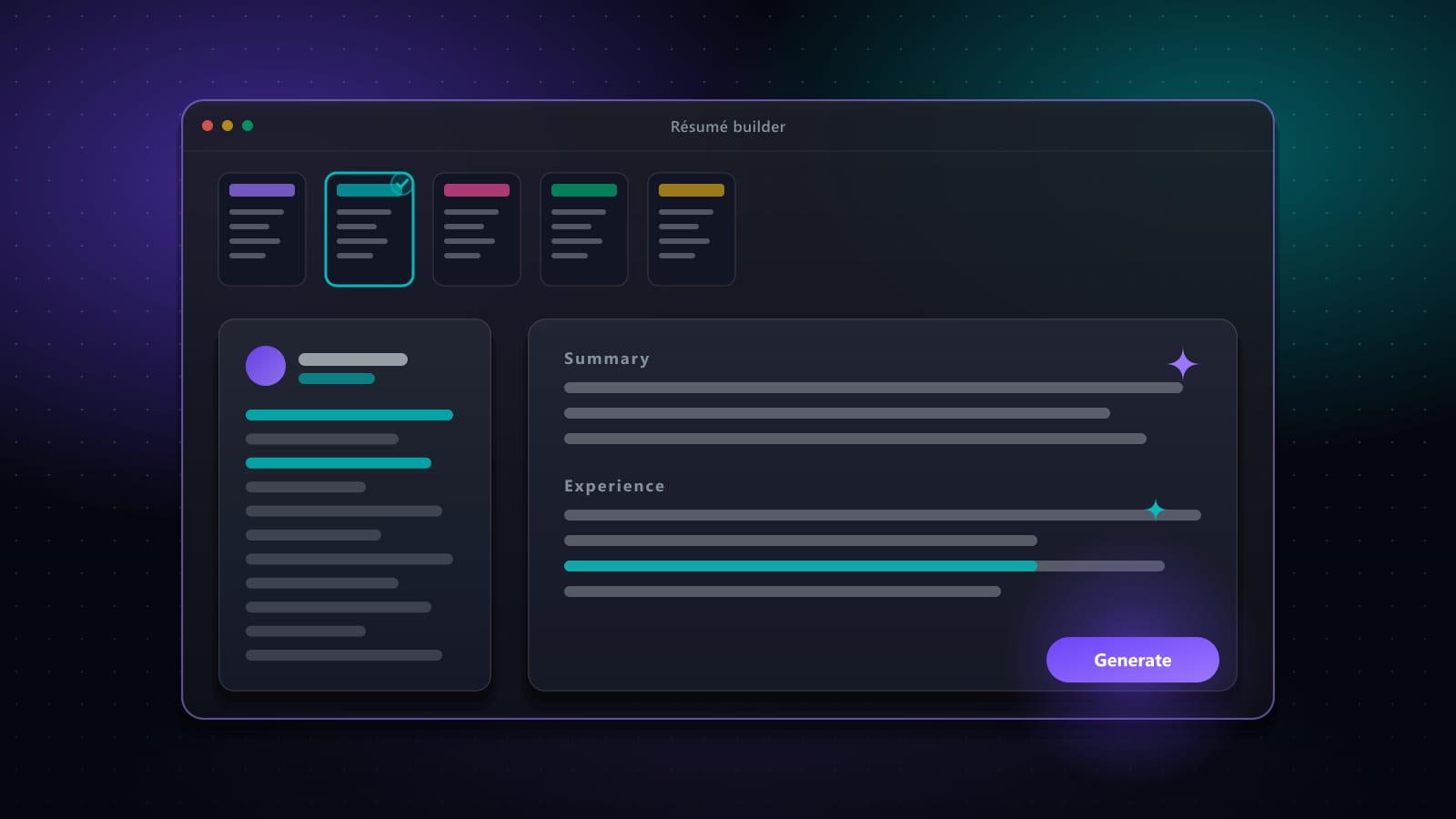
Tailoring is worth automating precisely because it is valuable and tedious — the combination that causes people to abandon it partway through a search. Automating the light pass keeps it happening on every application; reserving manual effort for priority roles is what keeps it meaningful.
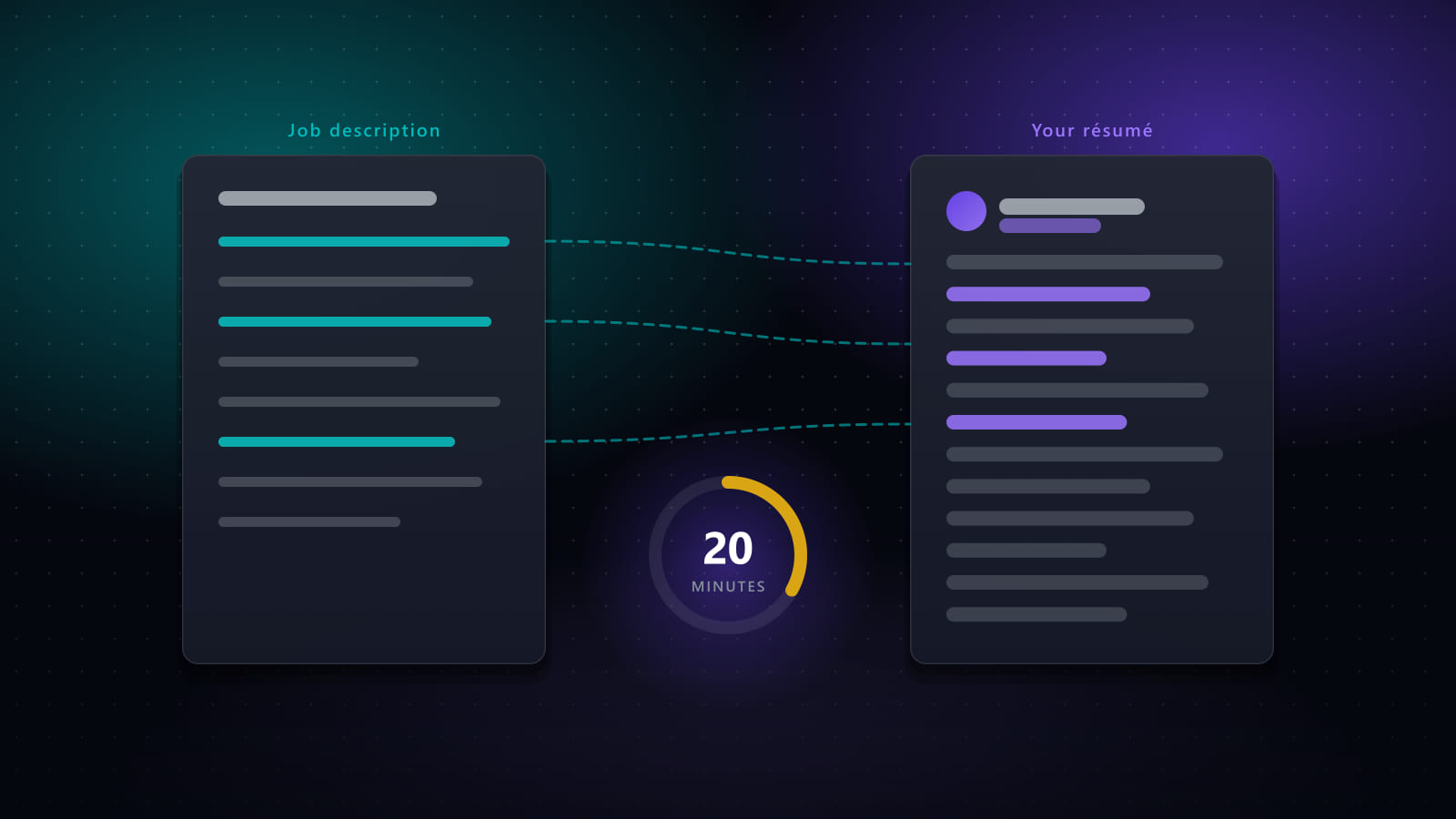
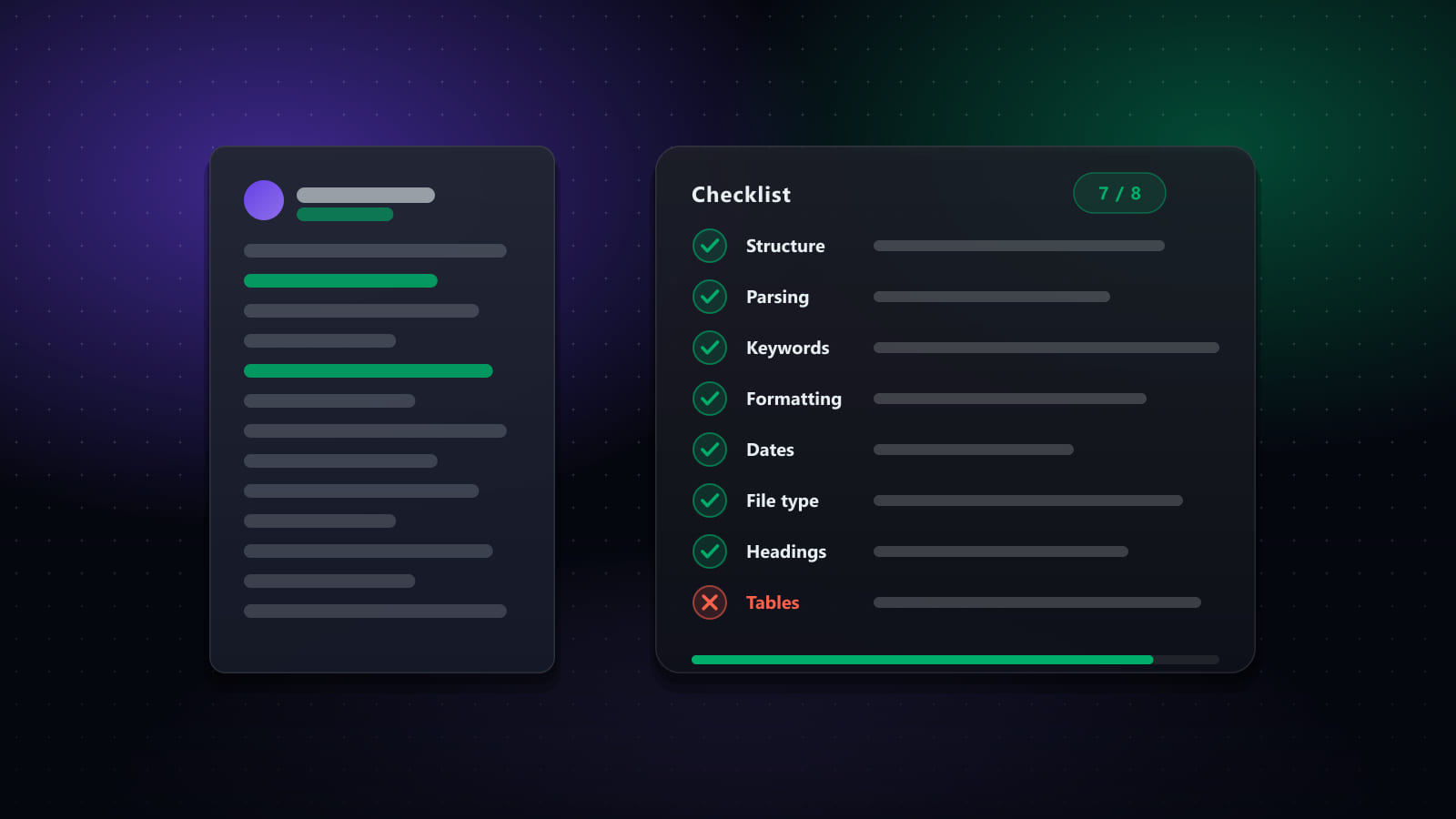
For the manual method, see how to tailor your resume in 20 minutes. For the screening side of the equation, see the ATS optimization checklist.
Frequently asked questions
What is AI CV tailoring?
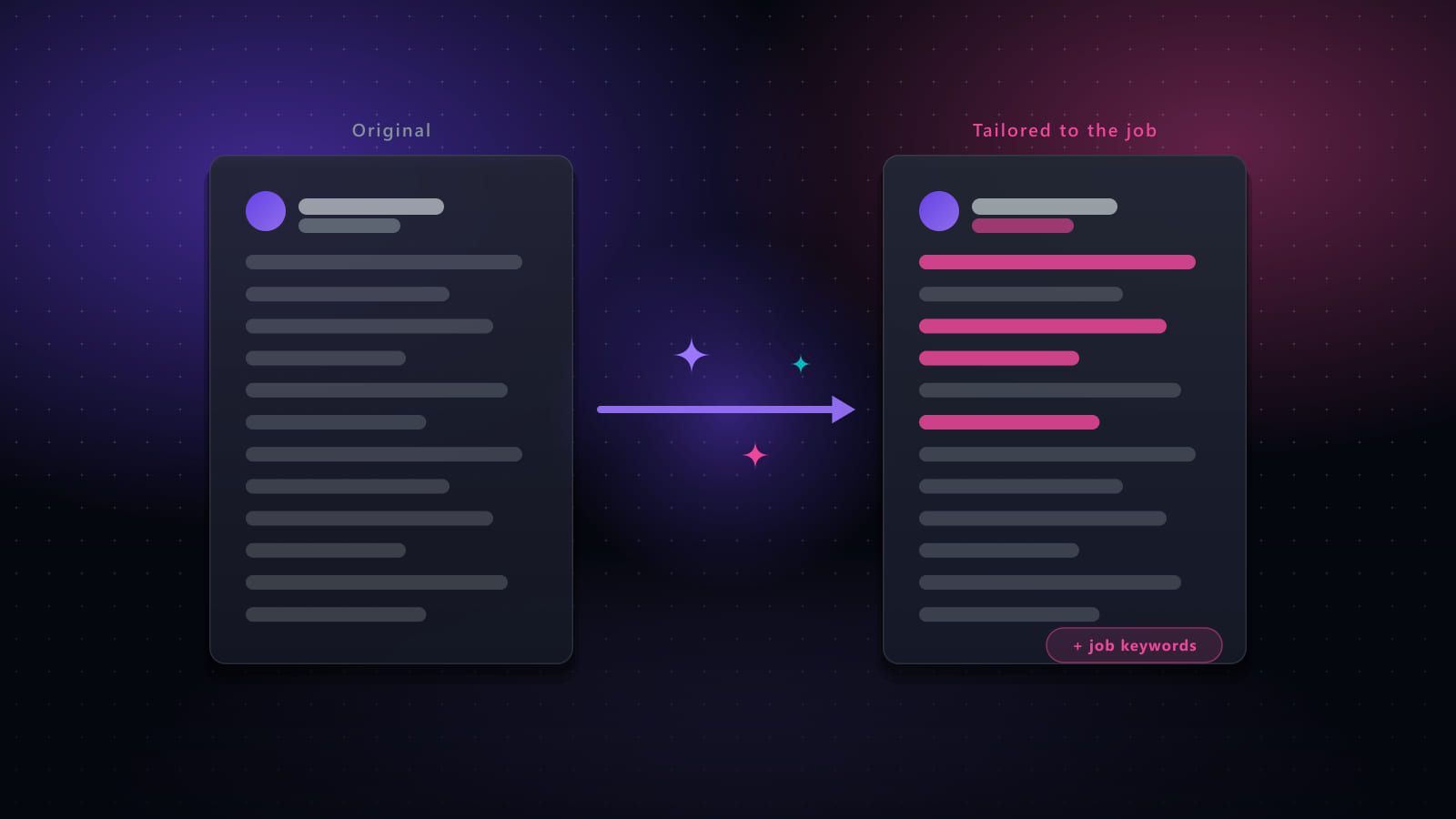
AI CV tailoring rewrites an existing CV for one specific job posting: reordering sections so the most relevant experience appears first, adopting the posting's vocabulary where it genuinely describes work you have done, cutting content irrelevant to that role, and rewriting bullet points to emphasise matching responsibilities. It works from material you already supplied. It is not the same as generating a CV from scratch, and a tailoring pass that adds experience you did not provide has malfunctioned rather than performed well.
Is using AI to tailor your CV cheating?
No, on the same basis that using a spellchecker or asking a friend to review your CV is not cheating. Every claim still has to be true and every rewritten bullet has to describe work you actually did. The line is factual accuracy, not tool use. What does cross the line is letting a generated document assert a qualification, a job title, a duration or a metric that is not real — that is a misrepresentation in your name regardless of which software produced the sentence.
What should AI never change on a CV?
Five things: job titles, employment dates, employer names, qualifications, and any quantified result. These are checkable facts and the categories where AI most reliably invents plausible-sounding detail — a 'reduced costs by 30%' that came from nowhere is the classic example. Treat them as locked. Everything else — ordering, emphasis, phrasing, which content to include — is legitimately editable.
How much does tailoring actually change response rates?
Tailoring is widely reported to improve callback rates, though published figures vary considerably by source and methodology and should be treated with caution. The more reliable observation is mechanical rather than statistical: screening — whether automated or human — compares your document against a specific requirement list, so a CV that puts matching evidence in the first third is easier to pass than one that buries it on page two. The benefit comes from relevance being visible quickly, not from the word 'tailored'.
Should I tailor my CV for every single application?
For every application worth making, yes — but the effort should be graded. A light pass, which automation handles well, reorders and adjusts emphasis and is appropriate for most applications. A heavy pass, where you rewrite bullets yourself and address the posting's specific language, is worth reserving for roles you genuinely want. Trying to do a heavy pass on everything is what causes people to stop tailoring entirely around application twenty.
Ready to automate your job search?
Best JobFinder combines job discovery, AI skill matching, resume tailoring, and configurable auto-submit in one platform — with a 7-day free trial.
Try Best JobFinder free →