From Setup to Offer in 4 Weeks: A Realistic Job Search Timeline
Most job searches don't fail because of a bad week — they fail because there was never a plan for the sequence, and effort gets spent unevenly: a burst of applications in week one before the profile is actually ready, then a long stall with nothing moving. A staged plan puts the setup work first, applications second, and gives interview prep and offers room to happen once there's actually something to prepare for.
Key takeaways
- Setup work done properly in week one pays back across every later stage — a thin profile produces weak match scores and weak tailoring downstream.
- Application volume matters less than pairing it with scoring and tailoring — sent blind, more applications doesn't reliably mean more callbacks.
- Interviews concentrate once tailored applications reach the roles they're actually a strong match for, not evenly across every week.
- The four-week shape is illustrative of a sequence, not a schedule any individual search is obligated to match.
- Skipping straight to high application volume without the setup stage usually shows up later as a high volume of silent rejections.
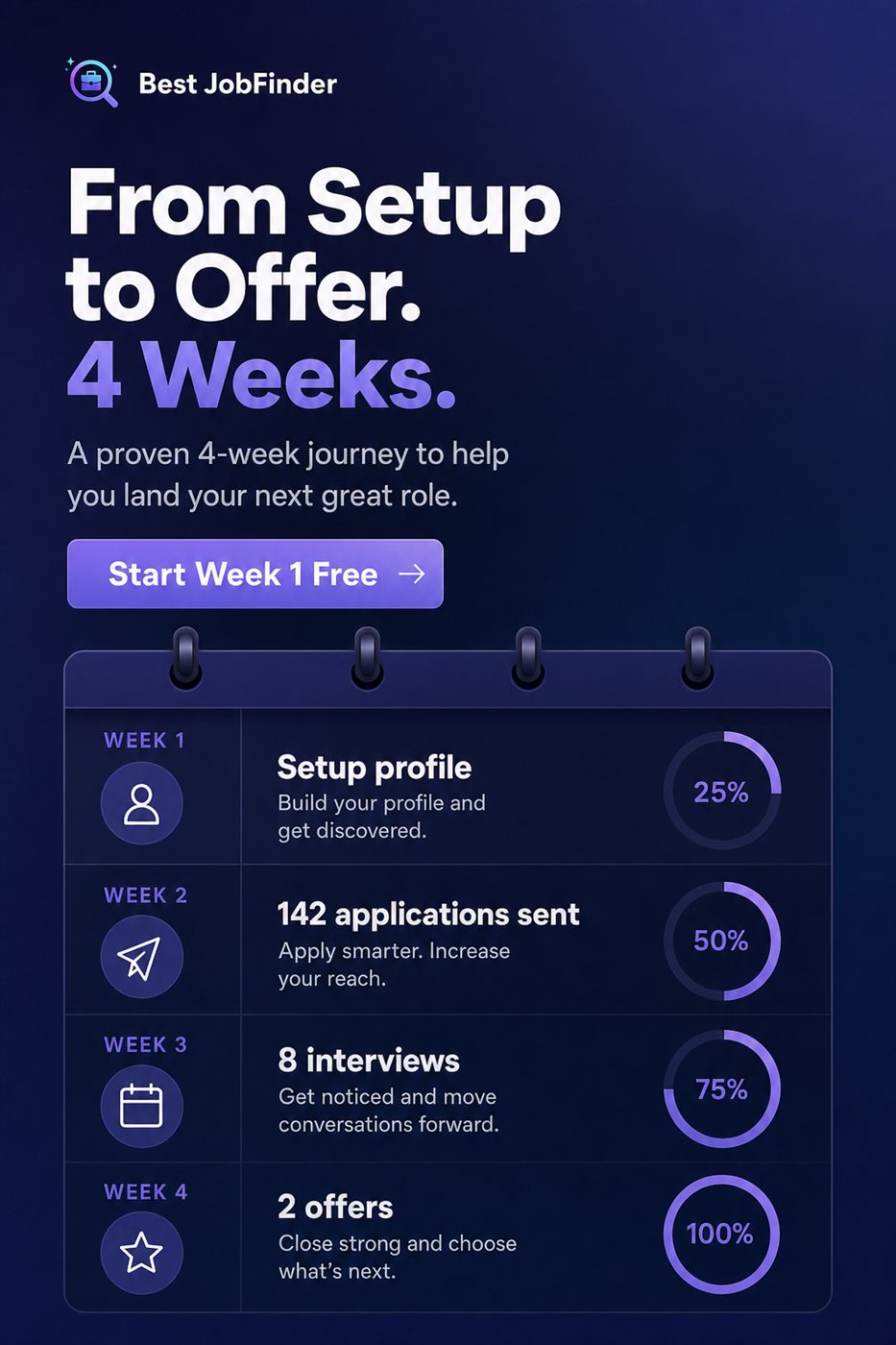
Week 1 — build the foundation, not the volume
A complete, honest CV and a genuinely filled-out skills profile — including competency levels, not just a list of technologies — are what every later stage reads from. A match score computed against a thin profile is only ever as accurate as the profile itself, and a tailored resume built from an incomplete master CV has less real material to draw on. This week is slower deliberately.
Week 2 — turn discovery into applications
With search profiles running and match scoring in place, this is the week volume ramps up — but volume paired with tailoring and scoring, not volume for its own sake. Sending more applications only helps if each one is still targeted; sending more generic ones faster just produces more silent rejections at the same rate.
Week 3 — interviews concentrate here, not evenly
Response times vary, but interview requests from week two's applications tend to land in week three once employers have had time to review. This is also when role-specific mock interview and technical assessment practice matters most — you're preparing for scheduled conversations, not hypothetical ones.
Week 4 — offers, and the decisions that come with them
If the earlier weeks worked, this is where multiple offers can genuinely land close together, which creates its own problem: comparing them and negotiating under a deadline. That's a good problem to have relative to the alternative, but it's worth anticipating rather than being surprised by.
What to do if your search doesn't follow this shape
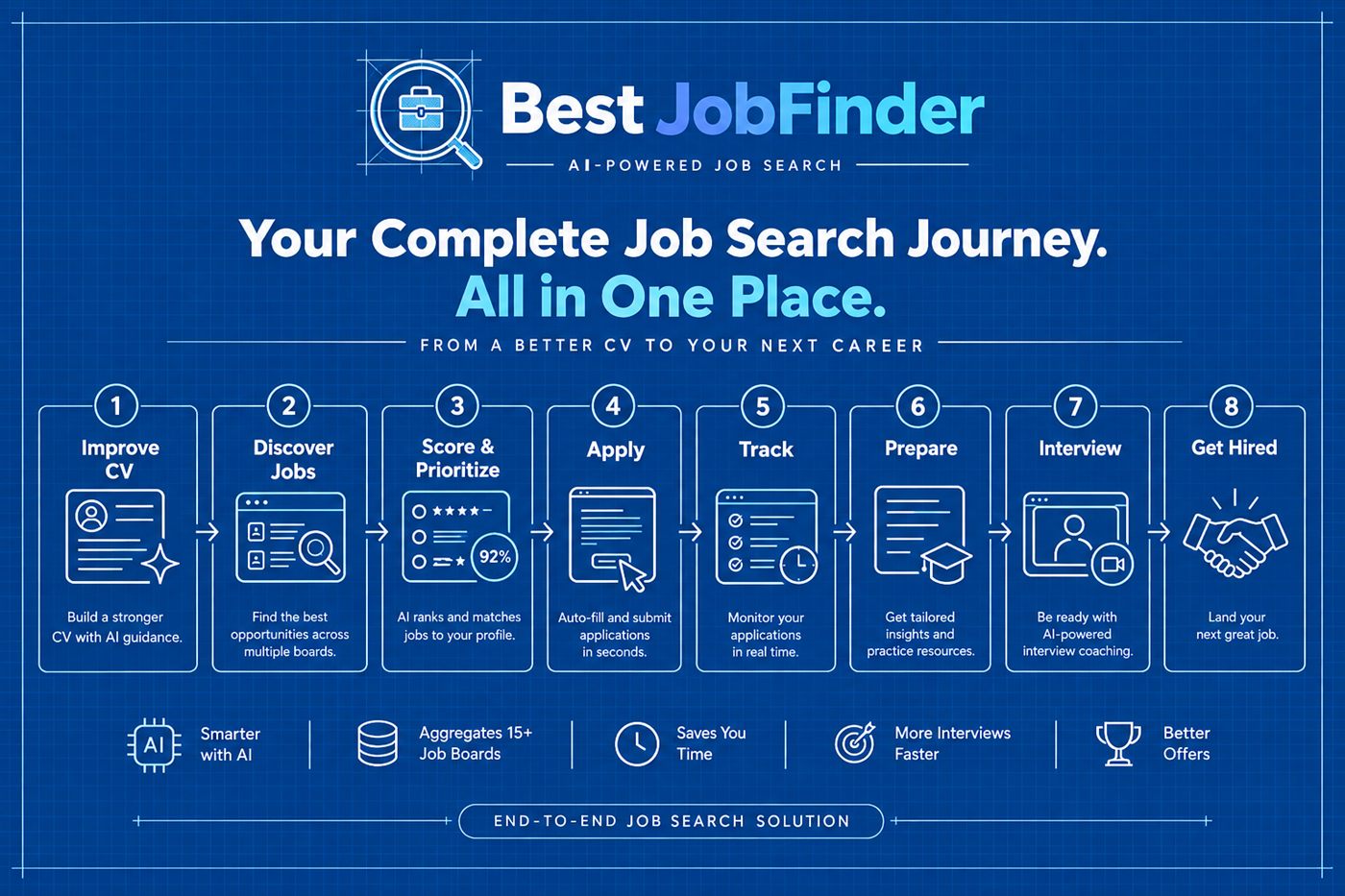
Most searches don't move in perfectly even weekly increments — some stall in week two, some get an early interview in week one. Use the plan to notice where you actually are: if application volume is high but interviews aren't following, the issue usually traces back to matching or tailoring, not to needing to apply faster. See the all-in-one platform overview for how the stages are meant to connect end to end.
Frequently asked questions
Is four weeks a realistic timeline for every job search?
No — it's an illustrative structure for how the stages of a search typically sequence, not a guarantee tied to any specific market, role or seniority level. Some searches close faster, many take longer, especially in competitive fields or during slow hiring periods. Use the four-week shape as a way to sequence effort, not as a deadline to feel behind on.
Why does week one focus on profile setup instead of applications?
Because every later stage depends on it being right — a thin skills profile produces inaccurate match scores in week two, and a rushed CV produces weaker tailored resumes in every application after it. Time spent getting the profile genuinely complete in week one pays back across every week that follows.
What if I get an interview in week one instead of week three?
Take it — the weeks describe a typical sequence of effort and volume, not a fixed schedule you have to follow in order. If a promising role and a strong match appear early, applying and preparing for it doesn't need to wait for a specific week to arrive.
How many applications is 'a lot' in week two, realistically?
It depends heavily on field, seniority and how tailored each application is — there's no single right number. What matters more than a specific count is whether the volume is sustainable for you and whether it's paired with the scoring and tailoring described earlier in this plan, rather than sent blind.
Ready to automate your job search?
Best JobFinder combines job discovery, AI skill matching, resume tailoring, and configurable auto-submit in one platform — with a 7-day free trial.
Try Best JobFinder free →