ChatGPT, Claude, Gemini, DeepSeek, Kimi, GLM, and Mistral for Job Search: What Each One Can Do
ChatGPT gets most of the “can AI find me a job” attention, but it isn’t the only assistant people ask this about. Claude, Gemini, DeepSeek, Kimi, GLM, and Mistral each show up in job-search-related searches too, and the honest answer looks similar across most of them — with a few real differences worth knowing before you pick one to lean on.
This page goes model by model. For a deeper dive on ChatGPT specifically, see Can ChatGPT Find Jobs for Me? and Can ChatGPT Apply to Jobs for You?
Key takeaways
- ChatGPT, Claude, and Gemini each ship a mainstream, consumer-facing agent mode that can control a browser and attempt to fill forms — with real differences (Claude also works with local files; Gemini is tuned specifically for browser-native web forms).
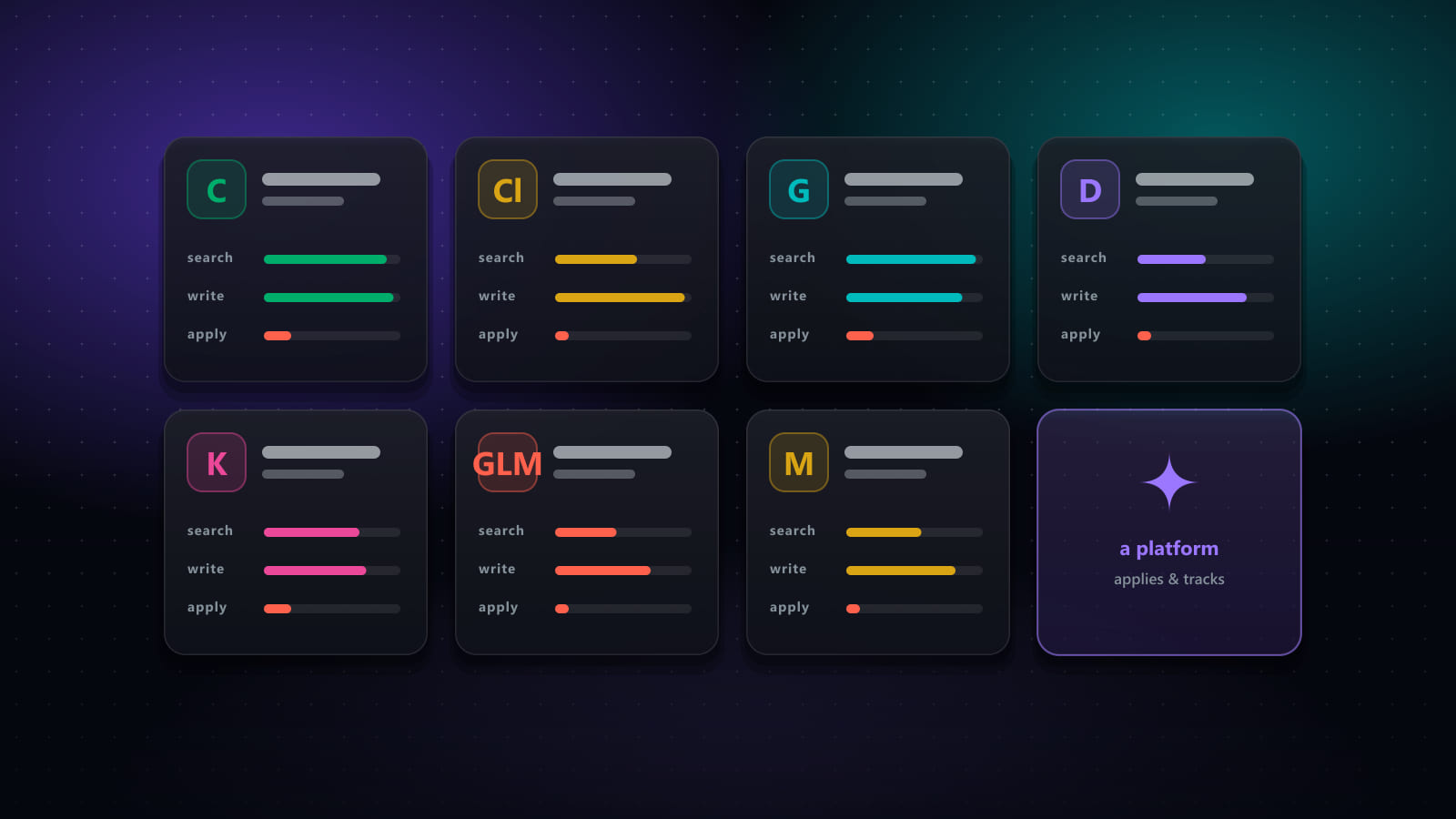
- DeepSeek, Kimi, GLM, and Mistral are primarily reasoning/chat models — strong, and in some cases built specifically for long-running agentic workloads — but they're mostly accessed via chat apps or APIs rather than shipping their own consumer job-application browsing product.
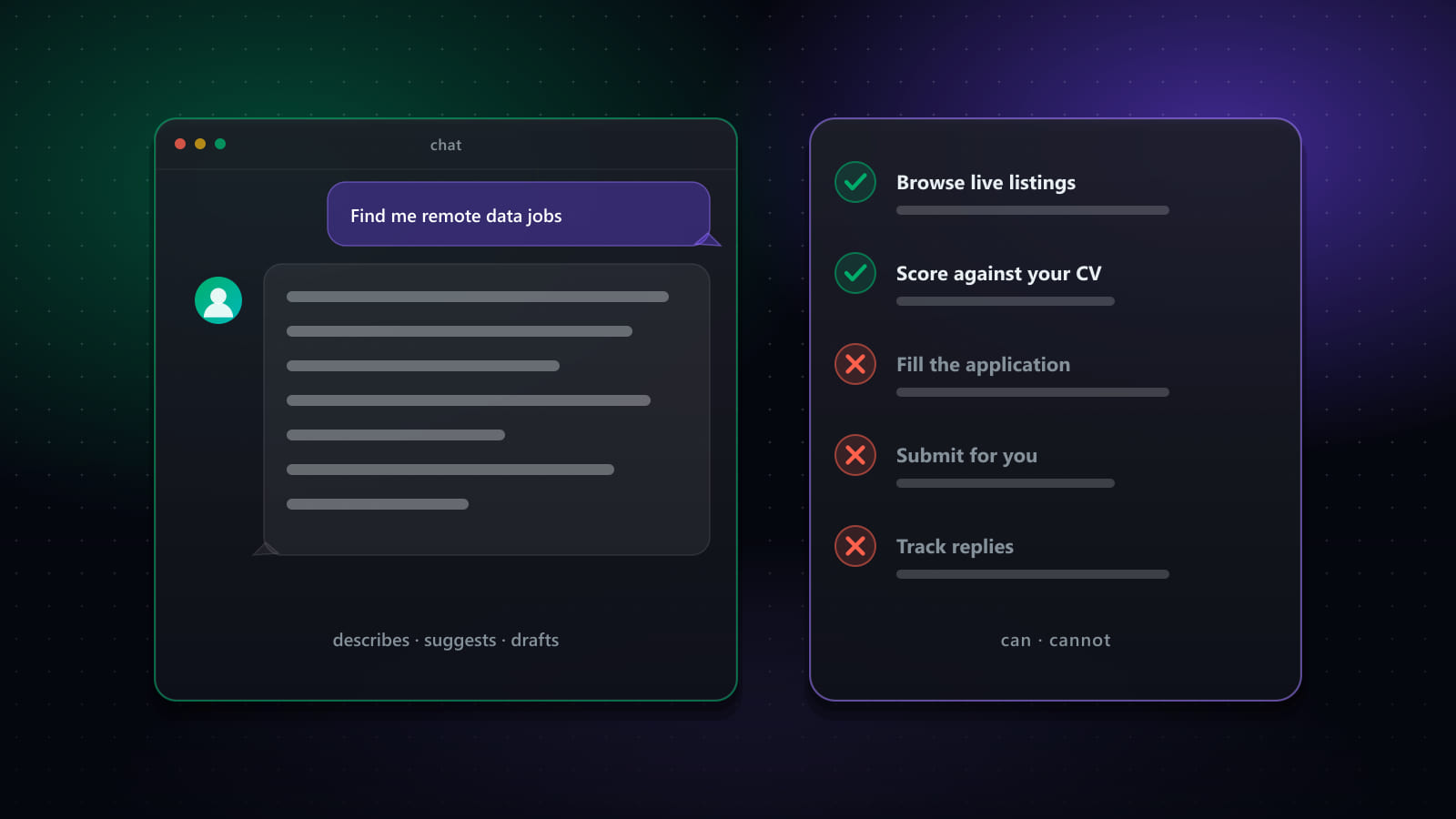
- Every assistant here is genuinely useful for the text side of a job search: summarizing postings, tailoring resumes and cover letters, and interview prep.
- None of them aggregates and deduplicates listings across many job boards, tracks application status over time, or runs on a recurring schedule without you starting each task.
- The dividing line isn't 'this model is smarter than that one' — it's whether the assistant is wrapped in the scheduling, aggregation, and tracking infrastructure a real multi-week search needs.
ChatGPT
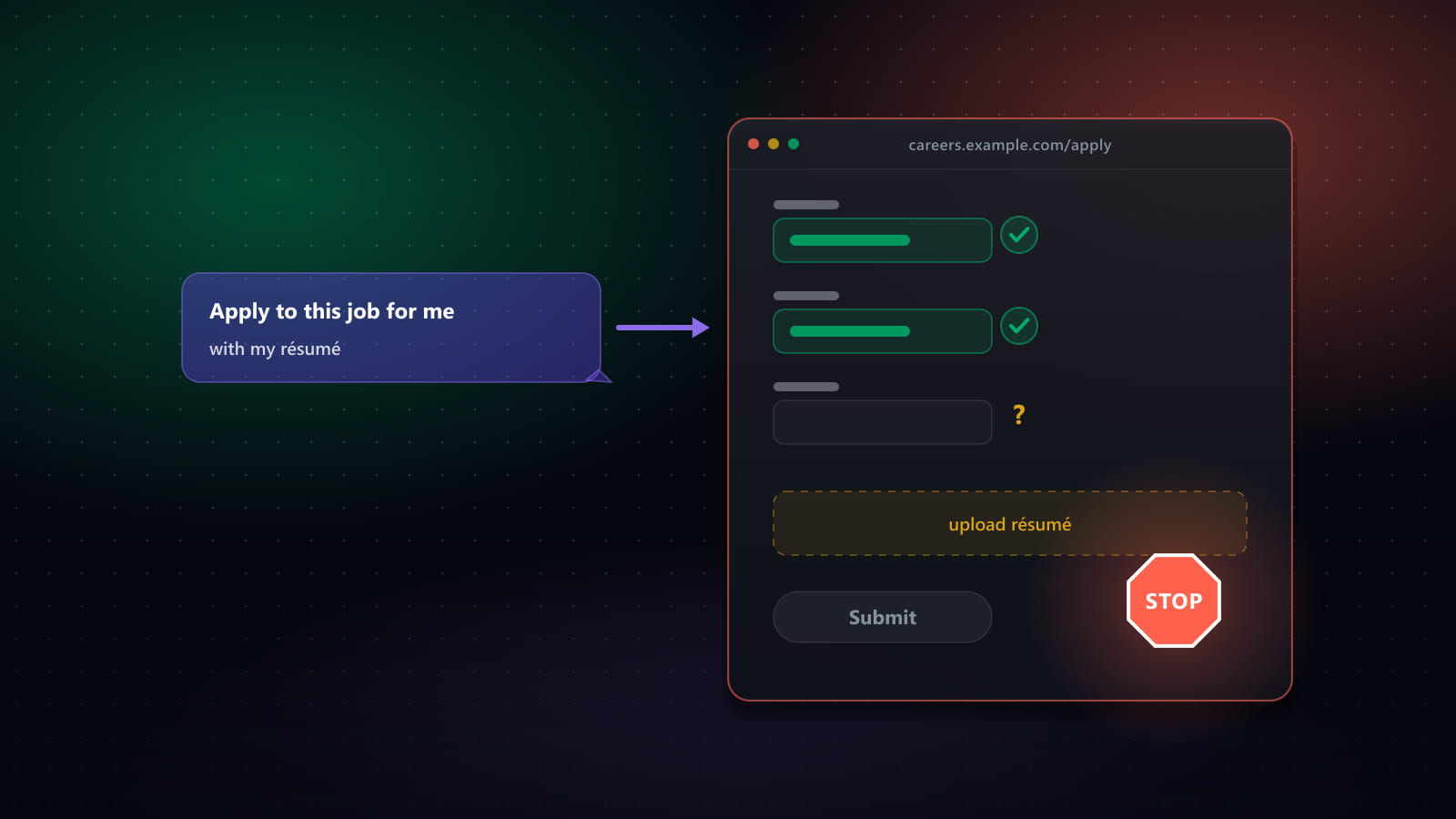
OpenAI’s assistant, with Search for current web results and an agent mode (evolved into ChatGPT Work) that can control a sandboxed browser. Strong for drafting and explaining; its agent mode can attempt simple form fills but reliably struggles with multi-step ATS wizards, logins, and CAPTCHAs. Full detail in our dedicated ChatGPT piece.
Claude
Anthropic’s assistant is a strong choice for the same drafting and reasoning tasks as ChatGPT, and its Computer Use capability is a meaningfully different kind of agent: rather than being limited to a browser tab, it can interact with an actual desktop environment — opening folders, working with files in a downloads directory, and carrying a task across more than one application. For a job search that means it can, in principle, handle a task that spans reading a downloaded posting PDF and drafting a response in one continuous session, which is a genuinely different shape of capability than a browser-only agent. It has the same limits as every assistant here: no job-board aggregation, no persistent application tracker, and no standing schedule.
Gemini
Google’s assistant, with an agent/Computer Use mode built specifically around browser workflows — reading a page’s underlying structure to identify form fields rather than relying purely on what’s visually on screen, which some independent comparisons rate as a genuine strength for web-native application forms specifically, and for juggling multiple browser tabs during research. Like the others, it doesn’t maintain a cross-session job search record or check boards on a schedule without being asked.
DeepSeek
A widely-used, largely open-weight reasoning model, popular for its cost and strong performance on technical and analytical tasks. It’s well suited to summarizing a job posting or reasoning through how your background maps to a role’s requirements when you paste the text in. It is not built around, and does not ship, a mainstream consumer feature for browsing job boards or clicking through application forms — using it for job search today generally means a manual copy-paste workflow rather than an autonomous one.
Kimi
Moonshot AI’s model line has specifically positioned recent releases around long-running, multi-step agentic work — the kind of task that runs for many steps or hours rather than answering a single question. That makes it a popular choice as the reasoning engine inside developer-built automation, including browser-agent and research tools. For an everyday job seeker opening Kimi’s own chat product directly, the practical experience is closer to a capable chat assistant than to a ready-made job-application agent — the agentic strength shows up when it’s the engine inside a purpose-built tool, not necessarily in the consumer chat app on its own.
GLM
Zhipu AI’s GLM line has, similarly, been tuned specifically for long-horizon tasks — extended, multi-step work such as sustained debugging or research runs. As with Kimi, this agentic capability is most visible when GLM is deployed as the model inside a developer-built harness or automation pipeline, rather than as a standalone consumer job-search product with its own browsing or apply feature.
Mistral
The French open-weight model family, accessible through its own Le Chat app as well as via API. It performs well on general chat, writing, and reasoning tasks relevant to job search — tailoring a resume section, explaining a posting’s jargon — without a widely-known consumer browsing/apply agent comparable to ChatGPT’s, Claude’s, or Gemini’s. Its openness makes it a common choice as a component inside other people’s job-search tooling rather than as an end-to-end consumer product itself.
What's true of all seven
Whichever assistant you use, the same three gaps show up, because they’re gaps in the category of product — a conversational assistant — not in any one vendor’s model:
- No cross-board aggregation. Each one answers from what it can search or already knows at the moment you ask; none continuously polls a set of job boards and deduplicates the results into one list for you.
- No persistent, structured tracking. A chat history, even with a memory feature, is prose — not a queryable record of which jobs you applied to and what happened next.
- No standing schedule. Every one of these is a task you start. None of them wakes up on its own to check for new postings or follow up on old applications.
Those three gaps are exactly what a dedicated job search platform is built to close, and it’s worth noting that most such platforms — Best JobFinder included — use models from exactly this family (OpenAI, Anthropic, and others) for the matching, scoring, and writing steps under the hood. The distinction isn’t which model reasons better; it’s whether that reasoning is wrapped in the scheduling, aggregation, and tracking layer a multi-week search actually needs. See Can ChatGPT or AI Agents Replace a Job Search Platform? for the fuller argument, and our eight-tool comparison for what that layer looks like across products in the category, including our own.
Frequently asked questions
Can Claude find or apply to jobs for me?
Claude can search the web for current postings when browsing is available, and its Computer Use capability can control a browser or desktop session to click through a form — similar in kind to ChatGPT's agent mode, with a notable difference: Claude Computer Use can also work with files on an actual file system, not just a browser tab. Like every assistant in this comparison, it has no standing schedule that keeps checking boards on its own and no built-in application tracker.
Can Gemini find or apply to jobs for me?
Gemini can search the web and, with its agent/Computer Use mode (which grew out of Google's earlier Project Mariner), can operate inside a browser specifically — reading the page's structure to identify and fill form fields, which some comparisons rate as strong for web-native forms. It shares the same limits as the others here: single-session tasks, no persistent job-search memory, and no cross-board aggregation.
Can DeepSeek, Kimi, GLM, or Mistral find or apply to jobs for me?
These are primarily powerful reasoning and chat models, several open-weight, most commonly used through their own chat apps, APIs, or third-party tools built on top of them — rather than shipping a mainstream, click-and-apply browser agent aimed at everyday consumers the way ChatGPT, Claude, and Gemini do. Kimi and GLM in particular are positioned for long-running agentic and coding workloads, which makes them popular as the reasoning engine inside developer-built automation (including tools in this category), but that's a different thing from a consumer opening the chat app and asking it to apply to a job directly.
Which AI chatbot is best for job search?
None of them is a job search platform, and none should be judged as one. For drafting, summarizing, and interview prep, any current mainstream assistant — ChatGPT, Claude, or Gemini — works well; pick whichever you already have a subscription to. For actually clicking through application forms, ChatGPT's agent mode, Claude's Computer Use, and Gemini's agent mode are the three with mainstream consumer products built for that, each with meaningfully different strengths (Claude for cross-application/file-system tasks, Gemini for browser-native forms). For running an actual multi-week search — aggregation, deduplication, tracking, scheduled auto-apply — none of the chat assistants is built for that job; a dedicated platform is.
Do any AI chatbots remember my job search across sessions?
Some have a memory feature that retains a loose summary of past conversations, but none maintains a structured, queryable record of which jobs you've seen, applied to, or heard back from — that requires an actual data model (rows, statuses, dates), which is not what a chat memory feature is built to be. This is a limitation shared across every assistant covered here, not one specific to any single vendor.
Ready to automate your job search?
Best JobFinder combines job discovery, AI skill matching, resume tailoring, and configurable auto-submit in one platform — with a 7-day free trial.
Try Best JobFinder free →