How to Build a Career Roadmap That Actually Gets You Promoted
"Get promoted" and "become a senior engineer" are goals, not plans. The gap between them is exactly where most career development stalls — not from lack of ambition, but from never turning the goal into a sequence of concrete, ordered steps.
A real career roadmap fixes that. Here's how to build one that survives contact with an actual job search.
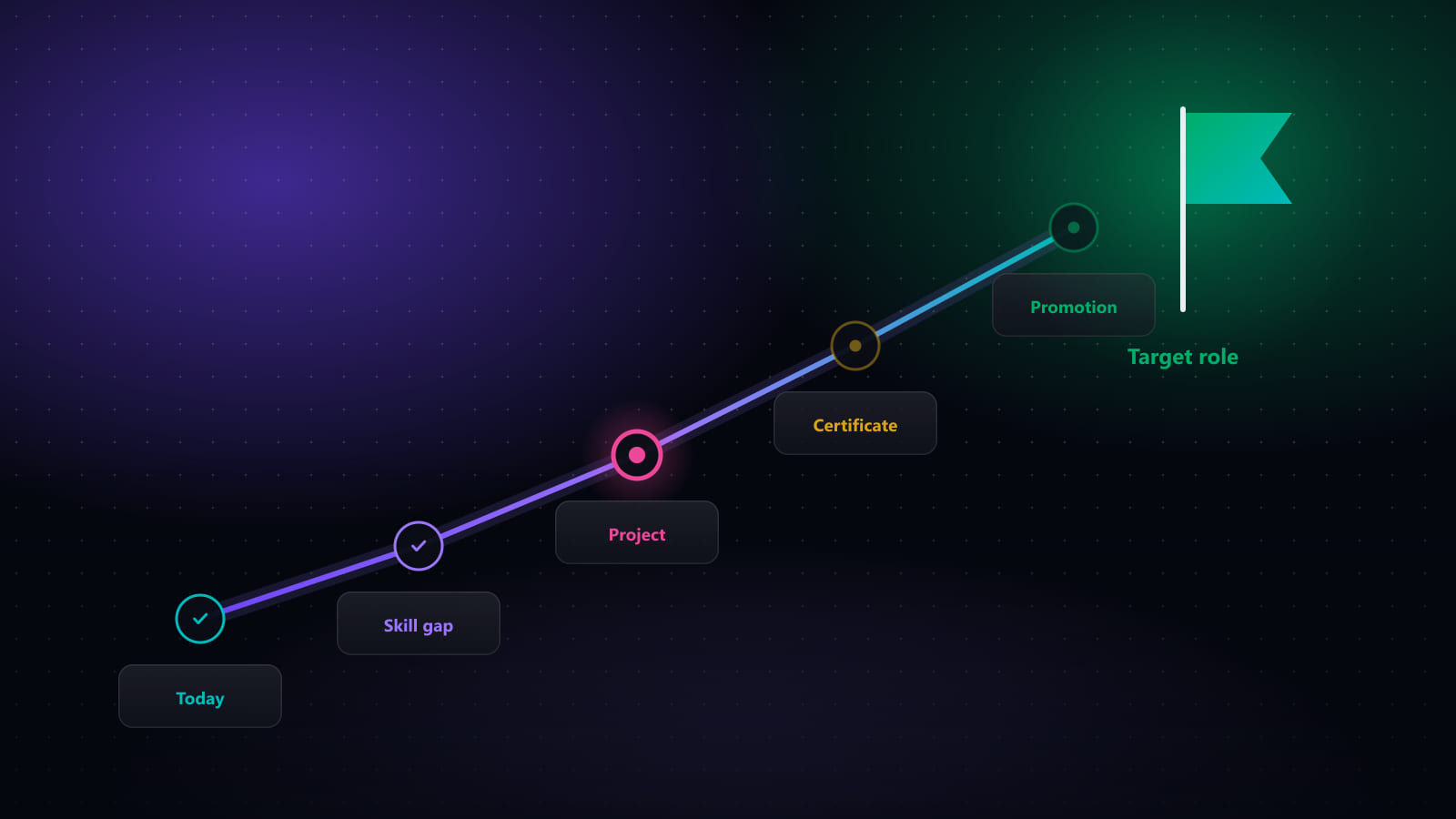
Start From the Target Role, Not Your Current One
A roadmap built backward from where you already are tends to just list "get better at what I already do." A roadmap built backward from the role you actually want reveals the real gaps — the specific skills, scope, and signals that role requires which your current position doesn't exercise.
Write the target role as specifically as you can: not "senior engineer" but "senior backend engineer, distributed systems, at a Series B-plus startup." The more specific the target, the more useful every later stage of the roadmap becomes.
Stage It — Don't List It
A flat list of ten things to learn has no sense of sequence or priority. A staged roadmap does: what has to come first because later stages depend on it, what can run in parallel, and roughly how long each stage should take. Three to five stages is usually enough — more than that, and the plan becomes something you admire rather than execute.
Pivot vs. Specialize — Decide Early
Before you build out the stages, answer one question honestly: are you deepening an existing direction, or changing one? The two need different roadmaps.
- Specializing rewards depth — advanced topics within your current domain, harder problems, more scope. Your existing experience compounds.
- Pivoting rewards breadth first — enough foundational knowledge in the new area to be credible, then a portfolio or project that proves it, since your existing experience won't speak for itself in the new direction.
Trying to do both at once is how a roadmap becomes unfocused. Pick one as the primary axis, even if the other stays a secondary thread.
Make It a Living Document, Not a One-Time Plan
A roadmap written once in January and never revisited is a wish list. Job searches change month to month — you discover a skill matters more than you thought, an interview reveals a blind spot, or your target role itself shifts as you learn what's actually out there. The roadmap should update with you.
This is exactly the gap Career Coach's roadmap generator is built to close — it isn't a static document you request once. You can give it follow-up instructions ("I already have this skill, drop it," "add more on system design") and regenerate it as your priorities move, so the plan stays a plan instead of becoming outdated the week after you wrote it.
Turn Each Stage Into a Measurable Checkpoint
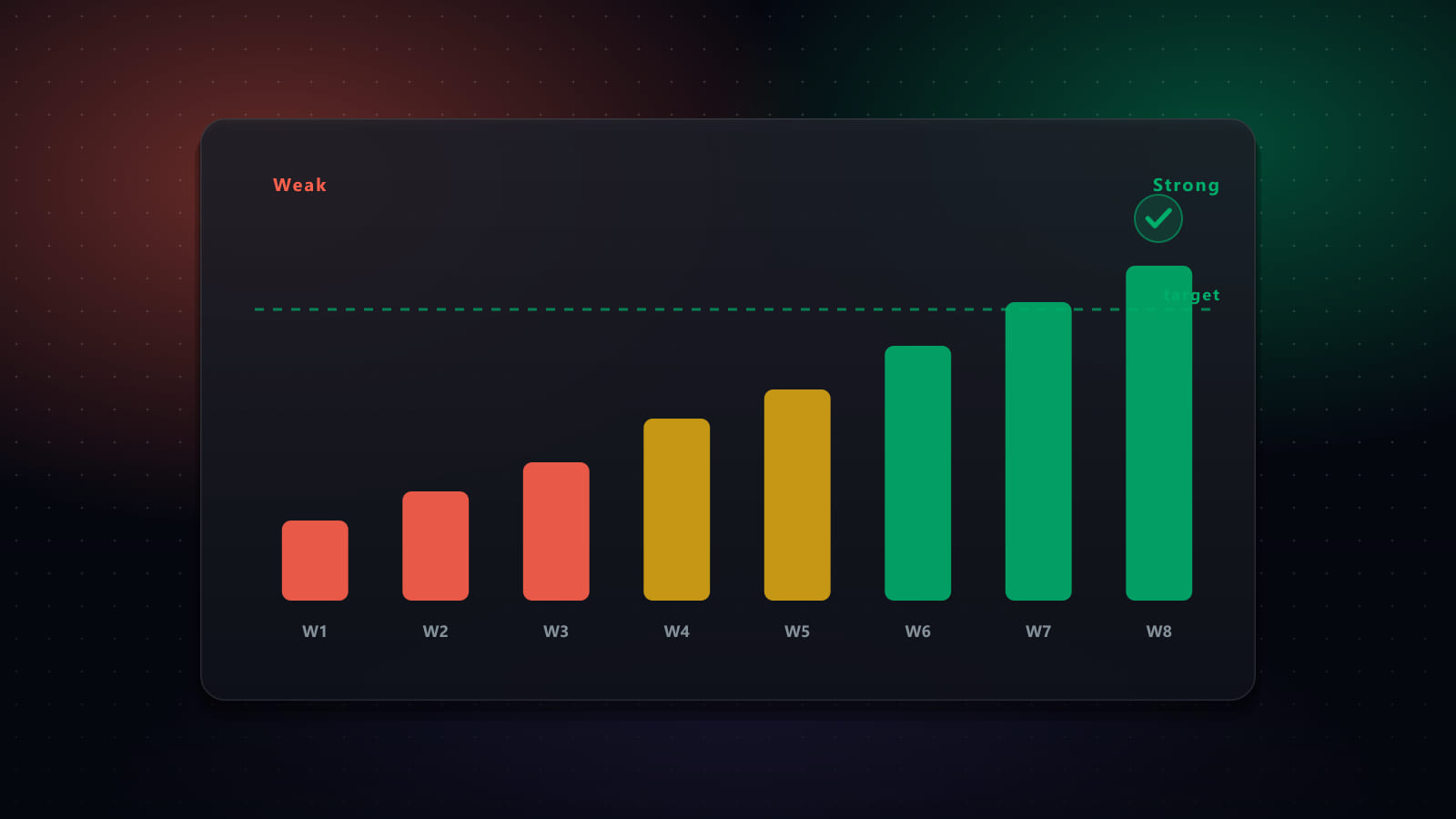
A stage that says "improve system design skills" is unfalsifiable — you can't tell when it's done. A stage that says "score 80%+ on a system-design-focused skills exam" is a checkpoint you can actually clear. Wherever possible, attach a measurable exit condition to each stage rather than a vague intention.
Related: How to get the most out of the Career Coach module → · Closing your skill gaps → · Job application burnout is real — here's how to fix it →
Ready to automate your job search?
Best JobFinder combines job discovery, AI skill matching, resume tailoring, and configurable auto-submit in one platform — with a 7-day free trial.
Try Best JobFinder free →