Who Controls Your Job Search Data? A Look at Privacy by Design
A job search tool ends up holding an unusually sensitive slice of your life: your full work history, your salary expectations, every company you've quietly applied to while still employed somewhere else, and often your actual login sessions on job boards. A privacy policy is a promise about that data. Privacy by design is what actually makes the promise true, in the architecture, before a policy has to be relied on at all.
Key takeaways
- No credentials stored — job board access works through your own logged-in session, not a password the tool holds on its own.
- Every query on your data is scoped to your account specifically, so one user's information isn't reachable from another's session.
- Your data should be genuinely exportable and genuinely deletable on request, not just described that way in a policy document.
- Anonymized operational logs, with no personal identifiers, are a separate category from personal data and can be retained for security without that being a privacy issue.
- 'Private' is a property of specific design decisions — session-based auth, per-user data isolation, real export and deletion — not a label a product can just claim.
No credentials, by design, not by policy
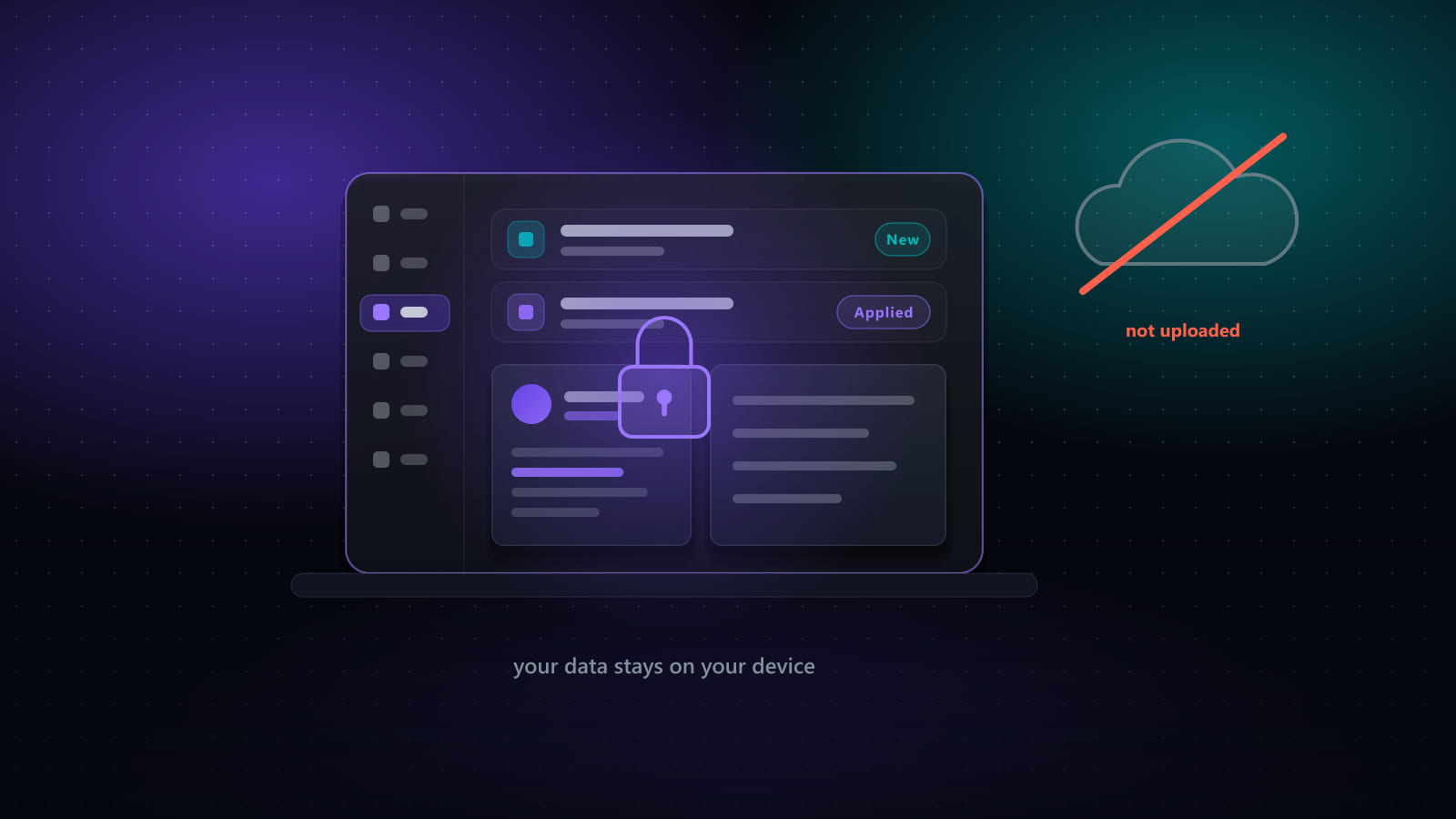
The way to genuinely never store a job board password is to never need one: automation rides on the session you already established by logging in yourself, the same way a browser you left open stays logged in. There's no password field for the tool to hold, transmit, or accidentally leak, because there's no password involved in what it does on your behalf.
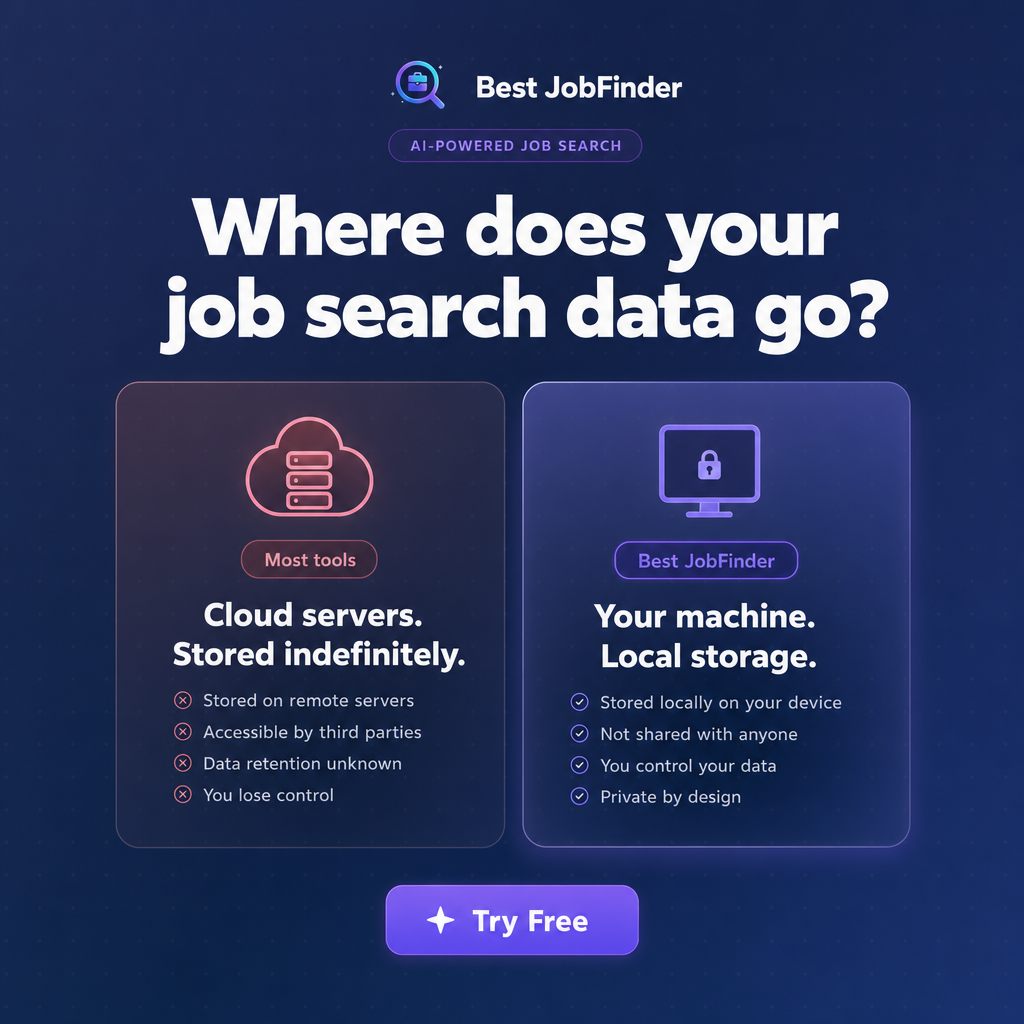
Isolation between users has to be structural
"Your data is private" needs to survive the case where a developer forgets to add a filter on one query out of hundreds. That's why user-data isolation shouldn't rely on every route remembering to scope itself correctly — a centralized safeguard that automatically restricts every query on your own tables to your own account, as a backstop rather than a convention someone has to remember, is what makes the guarantee real rather than aspirational.
Export and deletion that actually work
Two rights matter in practice: getting your own data back in a usable form, and having it genuinely removed if you ask. Deletion in particular is easy to get wrong quietly — removing the obvious record but leaving your name or email scattered across secondary tables that never got cleaned up. A real deletion process has to account for every place your personal data actually lives, not just the main record.
What's fine to keep, even after deletion
Anonymized records — a count of registrations on a given day, an aggregated usage metric with no name attached — are a different category from personal data and don't need to disappear when you delete your account. The distinction that matters is whether a record can be traced back to you specifically, not whether a record exists at all.
For a broader look at how job search tools generally handle this, see our privacy-first job search tools comparison.
Frequently asked questions
Does a job search tool need to store my job board login credentials?
No, and one that has to is a design choice worth questioning. Session-based access — using the same kind of cookie your browser already holds after you sign in manually — lets a tool act on a board you're logged into without ever seeing or storing a password. You log in once, in your own browser session; the credential itself never passes through the tool at all.
Can I get my data out, or delete it, if I stop using the platform?
Both should be a real, working feature, not a support ticket. A proper export gives you your data in a usable, portable format, and deletion should remove your personal data completely rather than leaving orphaned records tied to your name scattered across other tables.
What's the difference between deleting my personal data and deleting a usage log?
They serve different purposes. Personal data — your resume content, job applications, contact details — should be fully deletable on request. Separately, an anonymized operational or audit log (with no name, email, or personal identifiers left in it) can be retained for security and compliance reasons without that being a privacy problem, because it's no longer tied to you.
Is a desktop app inherently more private than a web app?
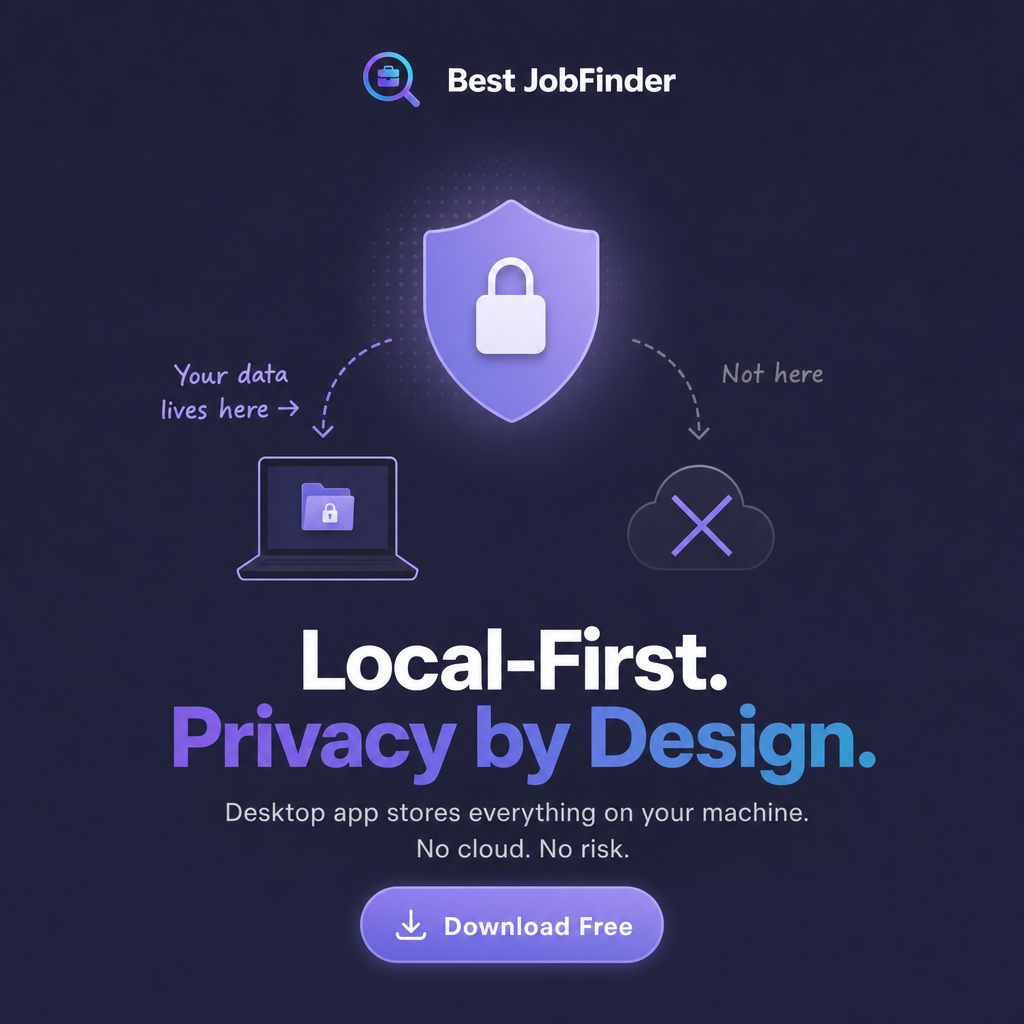
Not automatically — what matters is what data leaves your machine and where it goes, not which one is technically running locally. A well-built web app with strict per-user data isolation and no unnecessary data sharing can be just as protective as a desktop app; a desktop app that phones data home constantly isn't protective just because it has a local icon.
Ready to automate your job search?
Best JobFinder combines job discovery, AI skill matching, resume tailoring, and configurable auto-submit in one platform — with a 7-day free trial.
Try Best JobFinder free →